




The Mkomazi National Park is a vast and rugged, 3,500 square kilometre game reserve in northern Tanzania. Together with Tsavo, it forms one of the largest and most important protected ecosystems on earth and is a vital refuge for two highly endangered species; the black rhino and African wild dog. The Canine Anti Poaching Unit assists The George Adamson Wildlife Preservation Trust under the guidance of Tony Fitzjohn by providing equipment and training to support the establishment of a new anti-poaching dog section at Mkomazi. A conservationist driven by a lifelong passion for the wild, Tony Fitzjohn actively leads wildlife preservation efforts in East Africa. In 2006, he was honored for his work with an OBE.
The new section, consisting of a dual role Tracker/Apprehension and Infantry Patrol dog, has been aimed at eradicating the illegal trade of poaching and bushmeat hunting. The two dogs, named Bandit and Chocolate, were originally trained at the Ol Pejeta Conservancy by ourselves before arriving at Mkomazi to help support anti-poaching efforts at the park. We will continue to support Mkomazi National Park, and with the help of generous sponsors and fundraising campaigns, intend to provide the latest equipment, clothing and first aid training along side certified training to continue the successful progression of the section.
Rogue Royalty are proud supporters and equipment providers to the Canine Anti Poaching Unit.
About Mkomazi National Park
Mkomazi National Park sits in the shadow of Mount Kilimanjaro in northern Tanzania, bordering Kenya's Tsavo West National Park to the north. Together, the Mkomazi and Tsavo ecosystems form one of the largest connected wildlife areas in East Africa, covering millions of acres of semi-arid savannah, bush, and seasonal wetland habitat.
The park was in significant ecological decline for much of the late 20th century, affected by overgrazing, poaching, and human encroachment. The restoration effort led by Tony Fitzjohn and the George Adamson Wildlife Preservation Trust transformed it into a functioning protected area once more. Today, Mkomazi is a critical refuge for species that have few remaining viable habitats in East Africa.
Two species in particular make Mkomazi significant in global conservation terms: the black rhinoceros and the African wild dog. Both are endangered. Both depend on the active protection of the park's ranger force and, increasingly, on the canine anti-poaching unit that Rogue Royalty has been part of building and equipping.
The Black Rhinoceros at Mkomazi
The black rhinoceros is critically endangered, with fewer than 6,000 individuals estimated to remain globally, down from populations of hundreds of thousands in the early 20th century. The collapse was driven almost entirely by poaching for rhino horn, which commands extremely high prices in illegal Asian markets despite having no scientifically validated medicinal value.
Mkomazi holds a breeding population of black rhinos within a dedicated sanctuary in the park's north. This sanctuary is one of only a handful of locations in East Africa where black rhinos are breeding and where the population is showing signs of slow recovery. The security of the sanctuary depends directly on the anti-poaching effort at the park, which is where the Canine Anti-Poaching Unit, and Bandit and Chocolate, play their operational role.
A single poaching event at a sanctuary of this size can remove a breeding individual that represents years of conservation investment. The working dogs at Mkomazi provide the detection and deterrent capacity that makes those events less likely, and the tracking capacity to pursue poachers when they do enter the park.
The African Wild Dog: One of Africa's Most Endangered Predators
The African wild dog is listed as Endangered on the IUCN Red List, with fewer than 6,600 adults remaining in fragmented populations across sub-Saharan Africa. They once ranged across most of Africa below the Sahara. Today they survive in scattered pockets of protected land, and Mkomazi is one of those pockets.
Wild dogs are uniquely vulnerable among Africa's large predators. They are not as resilient to habitat loss as lions or leopards. Their pack-based social structure means that losses of individual animals can collapse the entire pack's reproductive capacity. Disease transmission from domestic dogs near park boundaries is a persistent threat. And because they range widely across large home territories, any gap in the park's protection perimeter puts them at risk.
The concept of "animals saving animals" is most literally true in the African wild dog's case at Mkomazi. The trained anti-poaching dogs reduce the frequency and success of human incursions into the park, which directly reduces the threats that wild dog packs face from human-wildlife conflict, snare trapping, and disturbance of breeding territories.
Tony Fitzjohn and the George Adamson Wildlife Preservation Trust
Tony Fitzjohn began his conservation career working alongside George Adamson at Kora National Park in Kenya, the same George Adamson who, with his wife Joy, rehabilitated Elsa the lioness and brought the story to global attention through Born Free. When Adamson was murdered by poachers in 1989, Fitzjohn continued his work and established the George Adamson Wildlife Preservation Trust as the vehicle for ongoing conservation programs in East Africa.
Fitzjohn's primary project became Mkomazi. He worked to have the park restored to protected status, to reintroduce both black rhino and wild dog to the area, and to build the conservation infrastructure including ranger training, wildlife veterinary capacity, and the anti-poaching dog section that Rogue Royalty has been part of equipping. His OBE in 2006 recognised decades of on-the-ground conservation work rather than institutional advocacy.
The George Adamson Wildlife Preservation Trust continues to operate Mkomazi as a conservation project, with the Canine Anti-Poaching Unit as one of its key operational components.
Bandit and Chocolate: From Ol Pejeta to Mkomazi
Bandit and Chocolate's path to Mkomazi is itself a story of conservation network collaboration. Both dogs were originally trained at the Ol Pejeta Conservancy in Kenya, the same conservancy where Rogue Royalty's lead trainer Daryll Pleasants built and trained the anti-poaching canine unit from 2013 onward. The training standard and the handler certification program that Daryll developed at Ol Pejeta produced the dogs and the handling methodology that Bandit and Chocolate were trained under before their transfer to Tanzania.
At Mkomazi, each dog was assigned a specific operational role based on the dual-role and single-role specialisation model developed at Ol Pejeta. Bandit operates as a dual-role tracker and apprehension dog. This combination gives the Mkomazi unit the ability to follow a human scent trail through the bush and, when necessary, to close on and apprehend an individual at the end of a tracking scenario. Chocolate operates as an infantry patrol dog, providing sensory extension for ranger patrols across the park's terrain, detecting human presence at distances and in conditions that rangers on their own cannot match.
The Canine Anti-Poaching Unit and Animals Saving Animals
The Canine Anti-Poaching Unit operates across multiple conservation programs in East Africa, supporting ranger forces with trained working dogs and the handler training required to deploy them. The phrase "animals saving animals" captures the core logic of what these units do: trained domestic dogs, equipped and handled correctly, actively protect wild animal populations that cannot protect themselves against organised human predation.
At Mkomazi, the equation is direct. Bandit and Chocolate protect a black rhino breeding sanctuary and an African wild dog population, two species among the most endangered in the world, by providing the anti-poaching capacity that a ranger force alone, without trained dogs, cannot match. The dogs' ability to detect and track human presence in the dark and across difficult terrain gives the unit a night operational capacity and a tracking capacity that is otherwise unavailable in the field.
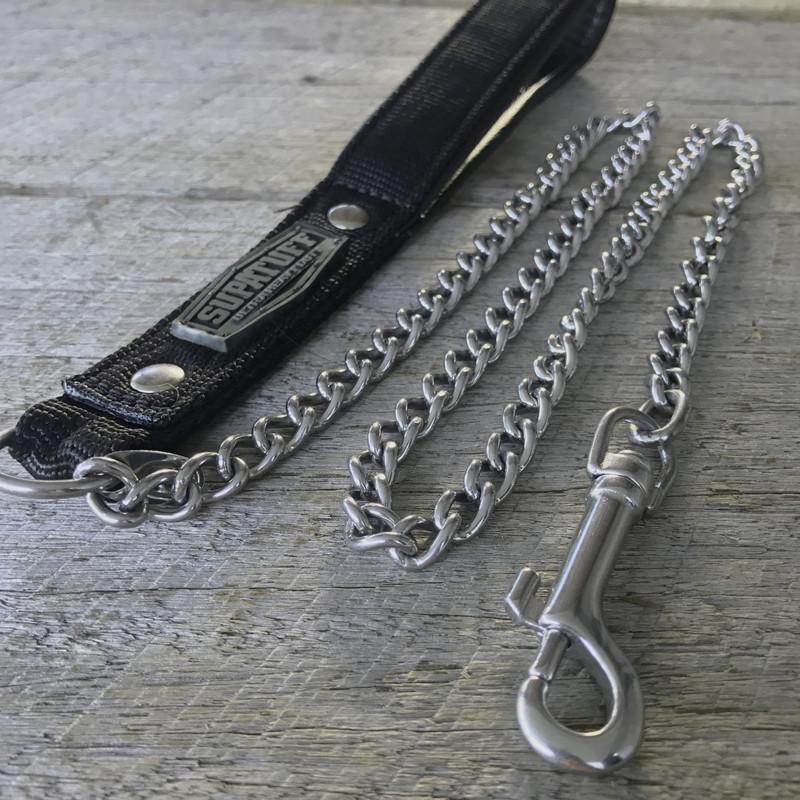
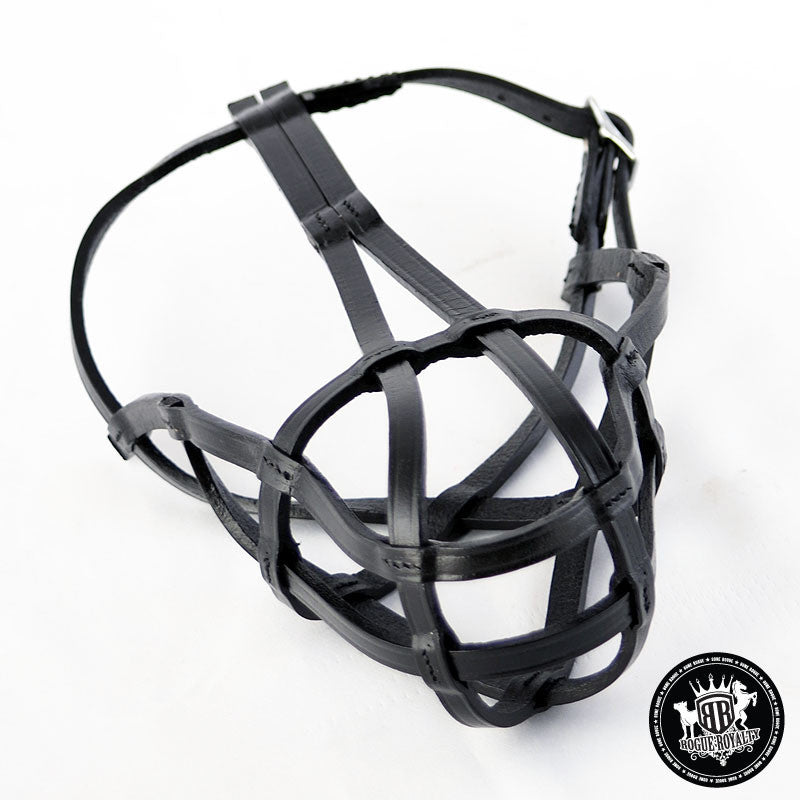
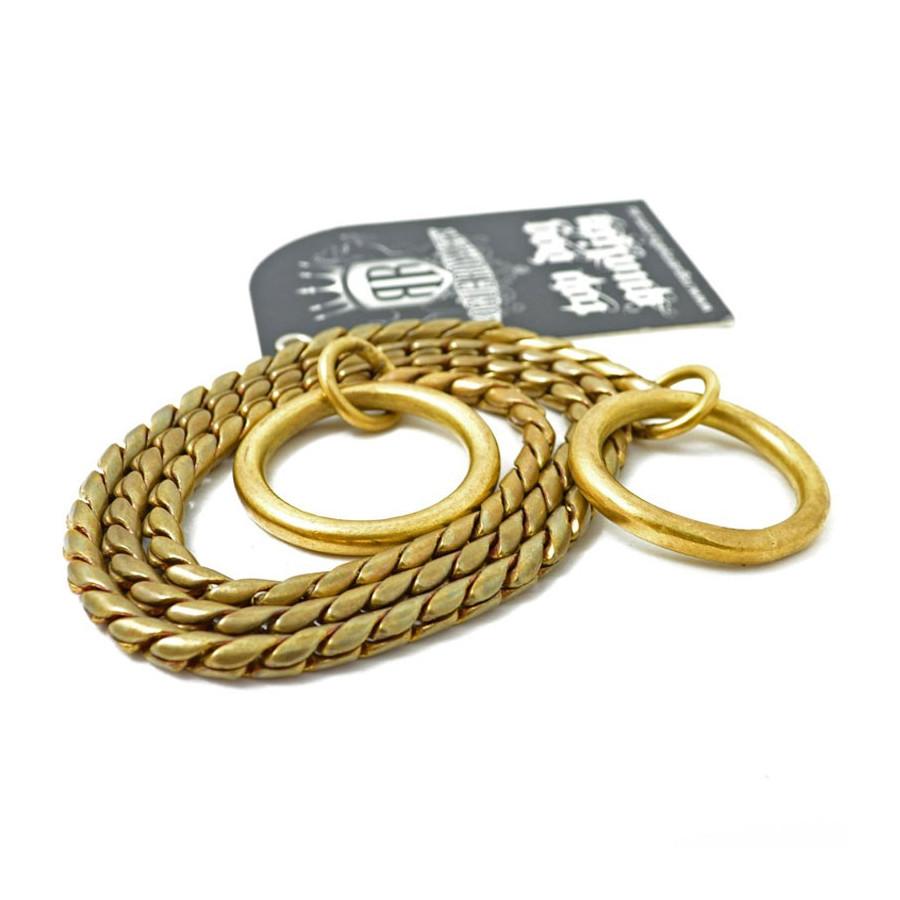
Rogue Royalty's role in this is as an equipment provider and supporter. The gear that Bandit and Chocolate use in their operational roles, their collars, leads, and harnesses, comes to a standard that reflects the operational demands of working in Tanzanian bush conditions rather than the lower demands of suburban pet use.
Why Gear Quality Matters in Anti-Poaching Conservation Work
The collar and lead that a working conservation dog wears are not aesthetic choices. They are operational equipment in the same sense that a ranger's boots or radio are operational equipment. A collar buckle that fractures during a reactive event in the middle of a tracking scenario produces a loose dog in terrain where recovery may not be possible. A snap clip that fails at the lead attachment during a patrol produces a dog that cannot be directed or controlled at the moment the control is needed most.
Rogue Royalty builds to the standard that removes these failure modes. All-stainless steel hardware at every connection point with no plastic at any load-bearing junction. Double-ply waterproof nylon that handles humidity, wet grass, and seasonal rains in the East African bush without strap fibre degradation. Reinforced stitching at D-ring and snap clip attachment points that distributes peak force rather than concentrating it at the most vulnerable thread.
For Bandit and Chocolate at Mkomazi, and for the other working dogs that Rogue Royalty has equipped across its conservation partnerships, this is the gear standard that responsible equipment provision requires. The same construction that makes a SupaTuff collar appropriate for a Bull Arab owner's daily use in Brisbane makes it appropriate for an anti-poaching dog's operational use in northern Tanzania.
Rogue Royalty's Three Conservation Partnerships
The Mkomazi project is the third of three conservation partnerships that define Rogue Royalty's involvement in African wildlife protection through working dogs. Each partnership is distinct in geography, species, and operational context, but all three share the same underlying principle: trained working dogs, equipped to a real operational standard, provide conservation protection that no other intervention can replicate.
The Ol Pejeta program, led by Daryll Pleasants from 2013, established an eleven-dog unit covering five specialist roles, from arms and explosives detection through to assault and tracker functions, to protect black rhino and other wildlife in Kenya's Laikipia County. The infrastructure built there, both the upgraded kennel facility and the handler certification program, produced the training standard and the trained dogs that Bandit and Chocolate were eventually drawn from for deployment at Mkomazi.
The Pit-Track program in South Africa operates a different model: a civilian militia using American Pit Bull Terriers to protect Southern White Rhinoceros in the South African bush, motivated by personal commitment to a cause rather than by institutional mandate. Rogue Royalty's connection to Pit-Track is one of shared values between two organisations that prioritise action over words.
Mkomazi sits between these two models. It is institutionally supported through the George Adamson Wildlife Preservation Trust but operates in a resource-constrained environment where external partnerships with organisations like Rogue Royalty and the Canine Anti-Poaching Unit provide capacity that the institutional budget alone cannot cover. For Australian dog owners who use Rogue Royalty products in their daily lives, these three partnerships represent what the brand's commitment to working dogs looks like when taken beyond suburban use to its most important application.
The Rogue Royalty Working Dog Gear Range
SupaTuff SECURITY Collar
For: working dogs in anti-poaching, security, and patrol roles; waterproof construction suited to East African and Australian outdoor conditions
Double-ply SupaTuff nylon. All-stainless hardware. No plastic at any connection. Wide-fit profile for large working breeds. Waterproof, UV-treated, rot-resistant. Lifetime guarantee.
$76.00 AUD | View the SupaTuff SECURITY Collar
SupaTuff Strong Dog Collar
For: working and active dogs requiring all-metal hardware and waterproof construction for field and training use
Double-ply SupaTuff nylon. All-stainless hardware. Wide-fit through slim-fit for all breed sizes. Waterproof. No plastic. Lifetime guarantee.
From $69.60 AUD | View the SupaTuff Strong Collar
Active X Dog Harness
For: working dogs in active field roles requiring full shoulder extension and chest-distributed leash force; patrol and tracking harness use
Built for active working use. Full freedom of movement. Leash force distributed across chest and shoulders. Solid metal hardware throughout.
Wide Fit Leather Collar Range
For: working dogs in dry conditions where full-grain bridle leather with solid brass hardware provides field-specification performance with a conforming fit over time
Full-grain bridle leather. Napa calfskin inner. Solid brass hardware. Small through XXXL. 10-year craftsmanship warranty.
From $66.50 AUD | Browse the Wide Fit Leather Collar Range
The full SupaTuff working dog range and the dog leash collection are built to the same standard as the gear supplied to the Mkomazi anti-poaching unit.
The same working dog gear provided to Bandit and Chocolate at Mkomazi is available for working dogs across Australia. SupaTuff range built to field standard.
Browse the Full Working Dog Gear Range →What Australian Dog Owners Say About Rogue Royalty
Thick, well made, durable and padded on the inside for comfort. Its such a beautiful collar! The leather is great for my dogs sensitive skin and she looks badass!
I absolutely love this colour on my girl and the quality is great ..ideal for a girl like mine who loves hanging off the back of the ute.
Love the quality, and the design, and our looks awesome, thanks
Amazing quality collars!
Great product and service
Frequently Asked Questions: Rogue Royalty and Animals Saving Animals
What is Mkomazi National Park?
A 3,500 square kilometre wildlife reserve in northern Tanzania. Together with Kenya's Tsavo ecosystem it forms one of the largest protected conservation areas in East Africa. Mkomazi is a critical habitat for the black rhinoceros and African wild dog, and the site of the Canine Anti-Poaching Unit that Rogue Royalty supports as an equipment provider.
Who are Bandit and Chocolate?
The two anti-poaching working dogs deployed to Mkomazi National Park. Trained at the Ol Pejeta Conservancy in Kenya, they were transferred to Mkomazi where Bandit works as a dual-role tracker and apprehension dog and Chocolate works as an infantry patrol dog. Together they provide the Mkomazi unit with both tracking and patrol capacity.
Who is Tony Fitzjohn and what is his connection to Mkomazi?
Tony Fitzjohn is a conservationist who leads the George Adamson Wildlife Preservation Trust and has spent decades working to restore and protect Mkomazi National Park, including its black rhino sanctuary and African wild dog population. He was awarded an OBE in 2006 for his conservation work in East Africa.
What is the Animals Saving Animals concept?
The phrase captures the role of trained working dogs in protecting wild animal populations. At Mkomazi, Bandit and Chocolate directly protect the black rhino and African wild dog populations by providing anti-poaching detection, tracking, and deterrent capacity that ranger teams without dogs cannot match on their own.
What is the African wild dog conservation status?
Listed as Endangered on the IUCN Red List, with fewer than 6,600 adults remaining. Mkomazi is one of very few protected areas in East Africa where a viable wild dog population exists. The anti-poaching program at Mkomazi protects their habitat and reduces human-wildlife conflict that directly affects wild dog survival.
What gear does Rogue Royalty provide to anti-poaching programs?
Collars, leads, harnesses, and tracker lines. The SupaTuff range uses all-stainless steel hardware and double-ply waterproof nylon suited to the extreme outdoor conditions of East African conservation work. No plastic at any load-bearing connection point. Lifetime guaranteed.
How does Rogue Royalty support wildlife conservation?
Through three programs: the Canine Anti-Poaching Unit at Mkomazi National Park in Tanzania, Pit-Track's anti-poaching operations in South Africa, and the Ol Pejeta Conservancy canine unit in Kenya. In all three, Rogue Royalty provides working dog equipment and training support to programs that use trained dogs to protect endangered species.

