




Type Australian dog brands into a search bar and the results are a wall of green and gold, kangaroo logos, and the word "Australian" repeated in nearly every product title. Almost none of it explains what that word actually requires the brand to have done, or where the line sits between a business that's Australian and a product that's Australian made. Those are two very different claims, and the gap between them is where a lot of marketing copy lives.
This guide breaks down what "Australian made" legally requires under Australian Consumer Law, why so many dog gear listings use the word loosely without technically lying, the difference between a brand's own claim and the formally certified logo, what to actually check before trusting a brand's claim, the red flags worth watching for on listings that overstate their local manufacturing, and where Rogue Royalty's own leather range sits in all of this, with the specifics rather than the slogan.
What "Australian Made" Actually Requires Under the Law
The Australian Competition and Consumer Commission regulates country of origin claims, and the rules are more specific than most shoppers realise. To legally use the phrase "Made in Australia" or "Australian Made," a product needs to meet two conditions. First, it must have undergone its last substantial transformation in Australia, meaning the manufacturing process that gave the product its essential character or fundamentally changed its form happened locally, not just a final packaging or labelling step. Second, at least 50 percent of the total cost of producing the product must have been incurred in Australia.
This is an important detail most buyers never see explained: a brand can legally call a leather collar "Australian made" even if the raw leather hide itself was tanned overseas, provided the cutting, stitching, hardware fitting, and finishing all happened in Australia and that local work represents at least half the total production cost. This is not a loophole or a grey area exploited by dishonest sellers. It is how the regulation is actually written, and it reflects the reality that very few countries, Australia included, run a fully vertically integrated leather industry from raw hide to finished product entirely within their own borders.
Why So Much Dog Gear Claims to Be Australian Without Fully Being It
Several phrases do a lot of work in pet product marketing without making the specific claim a shopper assumes they're making. "Designed in Australia" refers only to the concept and design stage; the actual manufacturing can happen anywhere. "Australian owned and operated" describes the business structure, not the factory location. "Proudly Australian" carries no defined legal meaning at all and can be used regardless of where a product is made.
None of this is necessarily deceptive on its own; these are accurate descriptions of what they claim to describe. The issue is that when a shopper sees an Australian flag, a kangaroo icon, and the word "Australian" repeated across a product listing, the natural assumption is full local manufacture, even when the actual claim being made is narrower than that. Reading the specific wording on a product page, rather than the overall visual branding, is the only reliable way to know which claim a brand is actually making.
| Claim | What It Actually Means | What It Does Not Guarantee |
|---|---|---|
| "Australian Made" | Last substantial transformation happened in Australia; 50%+ of production cost was local | That the raw materials themselves are Australian-sourced |
| "Australian Owned" | The business is owned and operated by Australians | That the physical product was manufactured in Australia |
| "Designed in Australia" | The design and concept work happened locally | Anything about where the product was actually produced |
| Australian Made logo (certified) | The brand applied for and met certification criteria from Australian Made Campaign Limited | A higher bar than self-declared claims, since it requires formal verification |
The Certified Logo vs a Brand's Own Claim
There is a meaningful difference between a brand stating "Australian made" in its own product copy and a brand displaying the certified Australian Made logo, the green and gold kangaroo triangle mark licensed by Australian Made Campaign Limited. The certified logo requires a formal licensing application, evidence supporting the manufacturing claim, and ongoing compliance review. A brand cannot simply add the logo to its packaging or website without going through this process.
This does not mean every brand without the certified logo is being dishonest. Many small and mid-sized Australian manufacturers, including across the dog gear category specifically, never pursue formal certification because of the application cost and administrative overhead relative to their business size, despite fully meeting the underlying manufacturing requirements. The absence of the certified logo is not proof a brand's claim is false. Its presence, however, is a stronger guarantee than an unverified claim alone, since it has been through an external review process rather than being entirely self-declared.
For dog owners specifically researching harnesses, collars, or leads from a brand claiming local manufacture, the most reliable combination of signals is a named location, specific process detail, and either certified logo use or a willingness to answer direct questions about where and how the product is actually made.
How to Actually Check a Brand's Manufacturing Claim
A few practical checks separate brands that back up their claim with specifics from brands that lean on the word "Australian" without detail.
Look for a named, specific location rather than a generic claim. A product page that states a suburb, town, or workshop address carries more weight than one that simply says "Australian made" with nothing further. Look for process detail: a brand describing how a product is cut, stitched, and finished, and naming the specific leather type or hardware grade used, is demonstrating manufacturing knowledge that's harder to fake convincingly than a one-line marketing claim. Check for the certified Australian Made logo specifically, which requires a formal licensing application and ongoing compliance with Australian Made Campaign Limited, rather than being a claim any brand can simply display.
It's also worth asking directly. A brand actually manufacturing locally will typically answer specific questions about where cutting and stitching happen, how long they've operated, and what their actual production process looks like, without deflecting to general marketing language. A business unwilling or unable to answer specifically is a signal worth noting, regardless of what their homepage claims.
Handmade Doesn't Automatically Mean Better. It Means Different Tradeoffs.
Small-batch, individually handmade leather goods from solo makers and small studios offer real things larger operations can't easily replicate: close customisation, a direct relationship with the maker, and often unique design work. The tradeoff is usually longer lead times, limited stock availability, narrower size ranges, and pricing that reflects the fully manual, lower-volume process.
A brand manufacturing at a larger scale, even while individually hand-cutting and hand-stitching every piece rather than running an automated production line, typically offers broader size availability in stock, faster turnaround, and more consistent quality control across higher volume. Neither approach is inherently superior. What actually determines product quality is the leather grade, hardware material, and stitching standard used, not the production scale itself. A buyer choosing between a solo Etsy-style leatherworker and a larger established Australian manufacturer should evaluate both on construction specifics rather than assuming smaller automatically means better craftsmanship.
Why Australian-Made Gear Generally Costs More
The price gap between Australian-made and imported dog gear is a real cost difference, not simply a markup attached to the word "Australian." Australian labour costs are significantly higher than the manufacturing hubs that produce most mass-market pet gear, and small to mid-scale local production doesn't benefit from the same economies of scale large overseas factories achieve through high-volume output.
This cost difference shows up directly in the finished product price, and buyers comparing options purely on sticker price without factoring in material quality, hardware grade, and warranty terms are not making an equivalent comparison. A well-built Australian-made leather collar with solid brass hardware and a meaningful warranty represents a different value proposition than an imported collar at a third of the price with zinc alloy hardware and no warranty beyond a basic return window, even though both might carry an "Australian" claim somewhere on their listing.
Common Red Flags Worth Watching For
A handful of patterns show up repeatedly across listings that overstate their Australian manufacturing claim, and recognising them takes most of the guesswork out of evaluating an unfamiliar brand.
Pricing that sits well below what local labour costs would realistically support is the single strongest signal. Genuine Australian cutting, stitching, and finishing work carries a real labour cost that shows up in the final price. A leather collar with solid brass hardware priced at a fraction of what comparable local manufacturing would cost is far more likely to be an imported product with local branding applied than a product that absorbed Australian labour costs at every stage.
Stock photography that looks identical across multiple unrelated sellers is another common tell. If the exact same product images, sometimes including studio lighting and backgrounds that clearly weren't shot specifically for that brand, appear across several different listings or websites, this usually indicates the product is sourced from the same overseas supplier and simply relabelled by each seller, regardless of what manufacturing claim sits in the product description.
Vague or shifting language under direct questioning is worth noting too. A brand asked specifically where a product is cut and stitched should be able to answer with a location or process detail. Responses that pivot back to "we're proudly Australian owned" without addressing the actual question asked are a sign the manufacturing claim may not hold up to scrutiny, even if the business itself is entirely legitimate and Australian-run in every other respect.
None of these signals alone proves a claim is false, and a brand can have one or two of these characteristics for entirely innocent reasons. Taken together, though, multiple red flags on the same listing are a reasonable basis for asking more specific questions before assuming the manufacturing claim is as solid as the marketing copy suggests.
The Rogue Royalty Manufacturing Story, Specifically
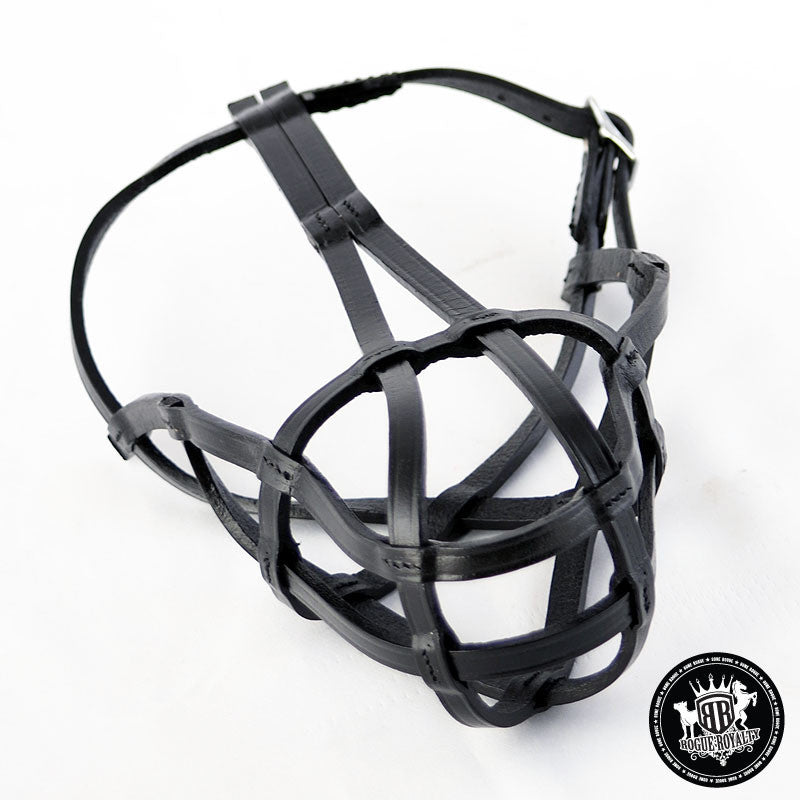
Rogue Royalty has operated from Campbelltown, New South Wales since 2009, with a physical retail location alongside the online store. The handmade leather collar range is individually cut and stitched in Australia from full-grain bridle leather, rather than produced on an overseas assembly line. Each collar is built one at a time rather than mass-produced on a single run, which is part of why sizing and finishing detail can vary slightly from piece to piece in a way that's characteristic of truly handmade leather goods rather than injection-molded synthetic alternatives.
The leather itself, consistent with standard practice across the Australian leather goods industry generally, including saddlery and leather fashion goods, is sourced as tanned hide rather than tanned domestically, since Australia does not maintain a large-scale domestic tanning industry comparable to established European tanning regions. The cutting, stitching, hardware assembly, edge finishing, and quality control all happen locally in the Campbelltown workshop, which is the substantial transformation stage that determines the local manufacturing claim under Australian Consumer Law.
Every leather collar in the range carries a 10-year craftsmanship warranty, a specific, verifiable commitment rather than a vague durability claim, reflecting confidence in the local handwork standard maintained across the range.
The SupaTuff Nylon Range: A Different Manufacturing Model
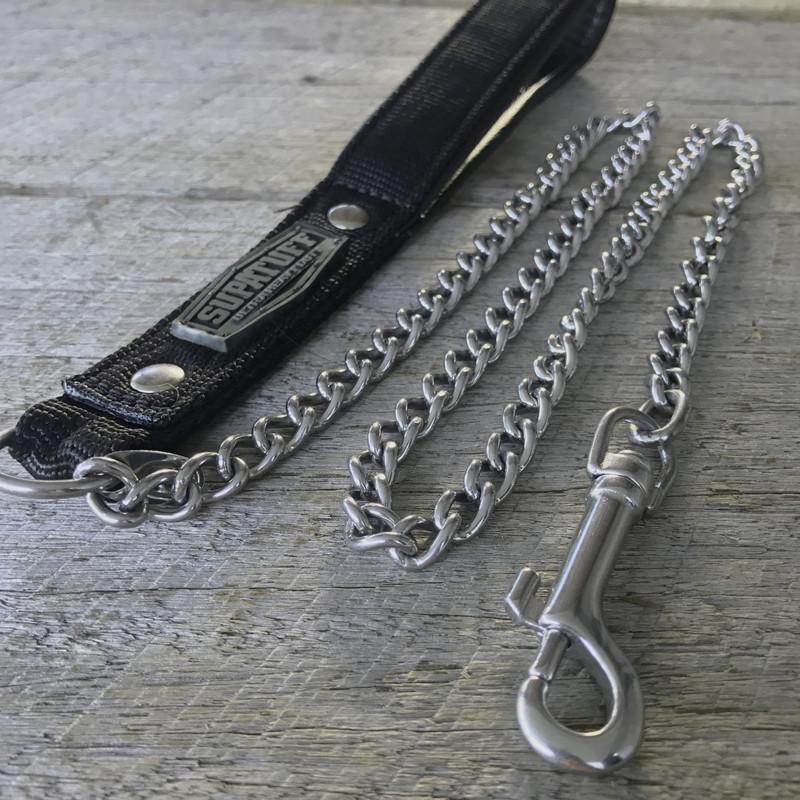
It's worth being equally specific about the difference between the leather range and the SupaTuff heavy-duty nylon range, since lumping every product category under one blanket "Australian made" claim would be exactly the kind of imprecision this guide is arguing against. The SupaTuff webbing is custom-specified to Rogue Royalty's own width and construction standards, double-ply with solid stainless steel hardware throughout and zero plastic fittings, a meaningfully different specification from generic off-the-shelf nylon webbing used by most budget competitors. The design, specification, and quality standard for this range originates with the brand directly, with assembly and fitting completed to meet that standard before sale.
Buyers specifically wanting fully Australian cut-and-sewn leather goods should look to the handmade leather collection, where the local manufacturing claim is most direct and verifiable through the physical Campbelltown workshop.
Individually cut and stitched full-grain bridle leather collars and harnesses, built locally since 2009. A 10-year craftsmanship warranty backs every piece in the range.
View the Handmade Leather Range →Warranty Terms Often Reveal More Than the Manufacturing Claim Itself
A brand's warranty policy is a practical, low-effort way to gauge confidence in their own product, and it tells you something a marketing claim alone cannot. A specific, meaningful warranty, a defined number of years covering defined faults such as stitching failure or hardware corrosion, signals a brand willing to stand behind their construction standard with a measurable commitment. A vague "quality guarantee" with no stated time period or coverage scope is far easier to offer regardless of how the product was actually made, since it commits the brand to nothing specific.
This matters directly for evaluating manufacturing claims because genuine local production, with closer oversight of materials and construction at every stage, typically supports more confident warranty terms than an imported product the brand has limited visibility into beyond the point of import. A ten-year warranty on hand-stitched leather work is a claim that becomes expensive for the brand to honour if the underlying construction quality doesn't hold up, which gives it real weight as a signal. A brand offering this level of warranty commitment on a product priced to compete with mass-imported alternatives is making a bet on their own construction standard that a purely imported, relabelled product usually cannot support.
When comparing two brands both claiming Australian manufacture, checking which one backs the claim with a specific, multi-year warranty against defined faults, rather than a generic satisfaction guarantee limited to a short return window, is often the fastest practical way to separate genuine local construction confidence from marketing language alone.
Questions Worth Asking Any Brand Before You Buy
Regardless of which brand you're considering, a short list of direct questions cuts through marketing language quickly. Where specifically is the product cut and stitched, not just where the business is registered. What hardware grade is used, and is it consistent across every colour and size in the range or only the flagship product photos. What warranty is offered, and is it a specific time period and coverage scope or a vague "quality guarantee" with no defined terms. Does the brand hold the certified Australian Made logo, or only an unverified self-declared claim.
A brand confident in its actual manufacturing process will generally answer these specifically. A listing that relies entirely on flags, kangaroos, and the word "Australian" without ever naming a location, process, or hardware specification is worth a more careful look before buying, regardless of price point or how the product photographs.
Frequently Asked Questions About Australian-Made Dog Gear
What does "Australian made" actually mean for dog gear?
Under ACCC Country of Origin rules, a product can only be labelled "Made in Australia" if it underwent its last substantial transformation locally and at least 50 percent of total production cost was incurred in Australia. A brand can legally claim this even if raw leather was imported, provided the cutting, stitching, and finishing happened in Australia and meet the cost threshold.
Why does so much dog gear online claim to be Australian when it isn't?
"Australian owned" is often used interchangeably with "Australian made" in marketing, despite being a different claim about business structure rather than manufacturing location. "Designed in Australia" similarly only refers to the design stage. Neither is illegal, but both can create an impression of local manufacture the product doesn't fully back up.
How can I tell if a dog gear brand actually manufactures in Australia?
Look for a specific named location rather than vague claims, process detail about how the product is made, and the certified Australian Made logo specifically, which requires formal licensing rather than being a self-declared claim any brand can display.
Is handmade always better than mass-produced dog gear?
Not automatically. Small-batch handmade goods offer customisation but often have longer lead times and limited sizing. Larger-scale manufacturing, even while still hand-cutting individual pieces, typically offers broader stock availability and more consistent quality control. Quality depends on materials and construction standard, not production scale alone.
Does Australian-made dog gear cost more than imported alternatives?
Generally yes, reflecting structurally higher Australian labour costs and the absence of large-scale manufacturing economies compared to overseas factories. The price difference is a structural cost difference, not simply a markup attached to the word "Australian."
What is the difference between leather sourced in Australia and leather tanned overseas?
Most full-grain bridle leather used by Australian dog gear makers, including high-end artisan brands, is tanned overseas, since Australia has a limited domestic tanning industry. This is standard and widely accepted practice across Australian leather goods generally. What matters for an Australian made claim is where the leather is cut, stitched, and assembled, not necessarily where the raw hide was tanned.
Where is Rogue Royalty dog gear made?
Rogue Royalty has operated from Campbelltown, New South Wales since 2009. The handmade leather collar and harness range is individually cut, stitched, and finished in Australia from full-grain bridle leather, rather than produced on an overseas assembly line, with a physical retail location alongside the online store and a 10-year craftsmanship warranty on every leather piece.

