




Most people shop for dog gear one item at a time — a collar this month, a new harness when the old one wears out, a lead almost as an afterthought. For a calm, easygoing dog, that approach works fine. But for a strong, working, or high-energy dog, mismatched gear tends to reveal its weakest link at exactly the wrong moment: a reinforced harness paired with a basic lead, or a sturdy collar clipped to a leash that was never built for real pulling force. This guide walks through building the collar, harness and lead as a single, matched system rather than three separate purchases.
Why Think of It as a System
Any chain is only as strong as its weakest link, and dog gear works the same way. If you invest in a genuinely reinforced harness but pair it with a basic, lightweight lead, the lead becomes the limiting factor the moment your dog puts real pressure on it. Thinking about the whole setup together — rather than upgrading one piece reactively after something fails — means every part of the system is built to handle the same demands as the rest.
Step One: The Collar
Start with a collar suited to your dog's neck and everyday needs. If your dog is strong or pulls, a wider heavy-duty collar spreads pressure more comfortably than a narrow one. If the collar is mainly for ID and everyday wear rather than lead-walking, a leather collar is a good-looking, comfortable option — our separate guide on leather versus heavy-duty collars goes into more detail if you're deciding between the two.
Step Two: The Harness
For any dog that's strong, pulls, or does structured work, the harness is usually where reinforcement matters most, since it bears the brunt of pulling force during walks. Our heavy-duty harness range is built around reinforced stitching and solid hardware for exactly this purpose. If your dog is large or giant breed, look specifically at big-dog and XL sizing rather than sizing up from a standard range, since proportions change as well as scale.
Step Three: The Lead
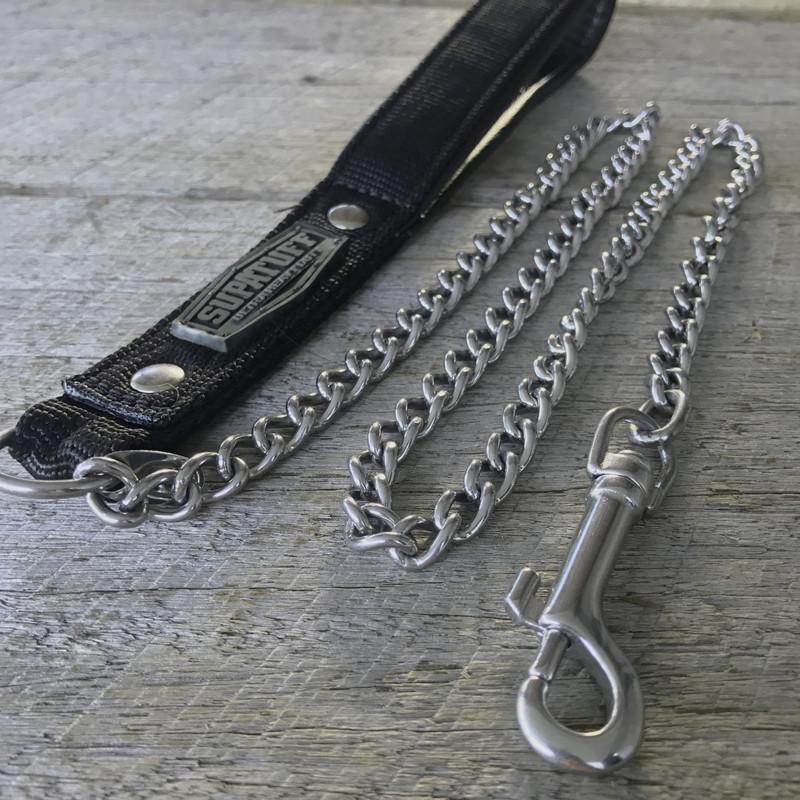
This is the piece most commonly under-matched to the rest of the system. A heavy-duty lead completes a reinforced setup properly, with the same attention to stitching and hardware as the harness it's paired with. If your dog is calmer or the lead is used more for structured training and recall work, our training and recall leads are worth a look instead.
Step Four: Aftercare
A complete system includes looking after it. Webbing gear generally just needs a wipe-down when it gets dirty. Leather pieces benefit from an occasional leather balm to keep the material supple and prevent it drying out or cracking. Either way, it's worth periodically checking stitching and hardware on pieces used daily, simply so any wear is caught early rather than discovered mid-walk.
Optional: Fitness and Conditioning Gear
If your dog is active or you're working on structured fitness or conditioning, a weighted vest can be a useful addition to the system, introduced gradually and ideally with guidance from your vet or a qualified trainer.
Putting It Together
-
Collar: heavy-duty for lead-walking, or leather for everyday wear
-
Harness: SupaTuff heavy-duty, sized correctly via big-dog/XL if needed
-
Lead: heavy-duty to match, or training/recall for structured work
-
Aftercare: leather balm for leather pieces, regular hardware checks across the board
Why It's Worth Doing This Way
Buying gear reactively — replacing whatever just failed — tends to cost more over time than thinking about the whole system from the start, and it's also how mismatched, weak-link setups happen in the first place. Every piece across our heavy-duty ranges is built to the same standard and backed by our 10-year warranty, so building a matched system doesn't mean guessing whether one piece will hold up as well as another.
A Realistic Timeline for Building the System
You don't need to buy everything on the same day. A sensible approach for many owners is to start with whichever piece is most urgently needed — often the harness, if the current one has failed or your dog has recently grown or changed behaviour — then fill in the remaining pieces over the following weeks as budget allows. What matters more than timing is making sure each piece, once bought, is genuinely matched to how your dog is actually behaving and being used, rather than treating any single purchase as a temporary stopgap.
Budgeting for a Full System
Outfitting a dog properly across collar, harness and lead is a bigger upfront spend than buying one item at a time, which is often why people default to a reactive, one-piece-at-a-time approach. It's worth thinking of it the way you might approach any durable purchase: a matched, properly built system bought once tends to work out more economical than replacing individual mismatched pieces every time one fails or gets outgrown. If budget is a genuine constraint, prioritise the harness first, since it does the most physical work of the three, then build out the collar and lead as you're able to.
Building the System as Your Dog Grows
If you're starting with a puppy that will grow into a strong or working adult, it makes sense to begin with appropriately sized puppy gear rather than jumping straight to heavy-duty equipment sized for an adult. Plan to reassess the whole system — not just the harness — once your dog reaches full size, since a collar or lead that was adequate for a smaller, lighter dog may not be the right match once they're fully grown and walking with more strength.
Signs Your Current System Needs an Upgrade
-
Any single piece shows fraying, stretching, or hardware wear before the others
-
Your dog has grown or changed shape since the gear was first fitted
-
You've noticed one piece (often the lead) feels noticeably less substantial than the rest of the setup
-
Your dog's activity level or role has changed — for example, moving into structured training or more demanding exercise
A Practical Checklist Before You Buy
Before purchasing, it helps to walk through the whole system together rather than shopping for pieces in isolation: confirm your dog's current chest and neck measurements, decide whether the collar is doing real work on lead or is mainly for ID, choose the harness type that matches your dog's actual behaviour rather than an idealised version of it, and pick a lead that matches the harness in build quality rather than treating it as an inexpensive add-on.
Frequently Asked Questions
Should my dog's collar, harness and lead all be the same brand?
It is not essential, but keeping them from a consistent, reliable source makes it easier to match construction quality across the whole system, rather than pairing a reinforced harness with a lightweight lead that becomes the weak point.
What gear does a working or strong dog actually need?
At minimum, a well-fitted collar for ID and everyday wear, a harness suited to their strength and behaviour, and a lead that matches the harness in construction quality. Additional gear like weighted vests can be added for structured fitness work.
Is it worth buying gear as a set or individually?
Either works, but thinking of it as a system from the start avoids the common issue of upgrading one piece at a time and realising later that a lightweight lead or collar undermines a reinforced harness.
How do I maintain a full gear system?
Wipe down webbing gear when dirty, condition leather pieces with a leather balm every few months, and check stitching and hardware periodically for wear, especially on pieces used daily.
When should I reassess my dog's whole gear system?
Whenever your dog's size, strength, or activity level changes meaningfully, or when any single piece starts showing wear ahead of the others — both are signs it's worth checking the whole setup rather than just replacing the one obvious item.

