




Some dogs go through gear faster than others. If you've had a harness stretch out of shape, a clip snap under pressure, or a collar wear through after a few months of determined pulling, the problem usually isn't your dog — it's that the gear wasn't built for the job. This guide covers what actually makes a harness, collar or lead heavy-duty, the signs it's time to upgrade, and what to check before you buy so you're not guessing based on marketing language alone.
What "Heavy-Duty" Should Actually Mean
The term gets used loosely, so it helps to know what to look for underneath it. Genuinely heavy-duty gear comes down to three things: the stitching, the hardware, and the material itself. Reinforced or double stitching at every point that takes weight — the D-ring, the clip junctions, the strap ends — is what stops gear failing exactly where it's under the most strain. Solid metal hardware (not plastic) holds up to sustained pressure without cracking or snapping. And the webbing or leather itself needs to be dense enough to resist stretching, fraying, or thinning out over time. If a product doesn't mention any of these specifics, it's worth asking before you buy.
Signs You Need Heavy-Duty Gear
-
Your dog has backed out of, snapped, or otherwise escaped a harness or collar before
-
They're a strong or muscular breed, even if not especially large in size
-
You use the gear for structured training, working roles, or high-energy activity
-
Standard gear has worn out, stretched, or shown fraying faster than you'd expect
-
You simply want equipment that will comfortably outlast a standard product
Heavy-Duty Harnesses
A heavy-duty harness distributes pressure across the chest and shoulders rather than concentrating it at one point, which matters more the harder a dog pulls. Look for a wide front and chest panel, reinforced stitching at the leash attachment point, and adjustment points that won't slip under load. This is also the category where a proper fit matters most — a harness that's even slightly too loose can let a strong dog back out of it entirely, which defeats the purpose of reinforced gear altogether.
Heavy-Duty Collars
A heavy-duty collar needs the same attention to stitching and hardware, but also benefits from a wider band, since a wider collar spreads pressure across more of the neck rather than concentrating it in a narrow strip. This is particularly relevant for dogs that pull on lead: a narrow collar on a hard-pulling dog puts real, concentrated pressure on the neck, while a wider, well-constructed collar handles the same pulling force more comfortably.
Heavy-Duty Leads
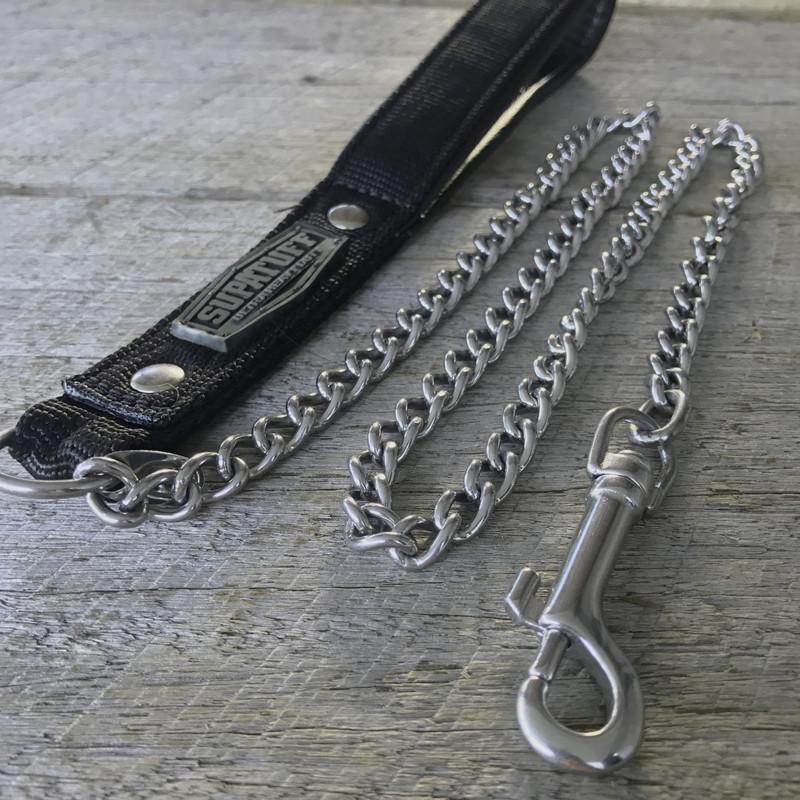
It's easy to focus on the harness or collar and treat the lead as an afterthought, but a heavy-duty lead completes the system. A reinforced harness paired with a lightweight lead means the lead becomes the weak point — the whole setup is only as capable as its least reinforced part. Look for the same things here too: solid clasps, reinforced stitching at the handle and clip end, and webbing that won't stretch under sustained tension.
Does Your Dog's Breed Matter?
Breed is a reasonable starting point, but strength and behaviour matter more than size alone. A compact, muscular dog can be just as demanding on gear as a much larger one, and a calm giant breed may never need anything beyond standard equipment. If you're working through this by breed, our German Shepherd and Rottweiler guides go into more specific detail, but the underlying question is always the same: does this individual dog pull hard, escape standard gear, or do demanding work? If yes, heavy-duty is worth it regardless of breed.
Building a Matched System
Rather than upgrading one piece of gear at a time, it's worth thinking about the collar, harness and lead as a single system. A dog that's strong enough to need a reinforced harness is generally strong enough to need a reinforced lead too, and mismatched gear tends to reveal its weakest link at the worst possible moment. If you're outfitting a dog from scratch, working through all three at once — rather than realising the lead needs upgrading a month after the harness — saves both money and a few stressful walks.
What to Check Before You Buy
-
Stitching: double or reinforced stitching visible at the D-ring, clips and strap junctions
-
Hardware: solid metal clips and rings, not plastic
-
Material density: webbing or leather that feels substantial, not thin or flexible under light pressure
-
Fit range: proper adjustment for your dog's actual measurements, not just their weight bracket
-
A genuine warranty: a brand willing to stand behind its own construction for years, not months
Where to Start
If you already know your dog needs genuinely reinforced gear, our SupaTuff heavy-duty harness range, heavy-duty collars and heavy-duty leads are built around exactly the construction details covered in this guide, and every piece is backed by our 10-year warranty. If your dog is on the larger side too, our big-dog and XL harnesses combine both the sizing and the reinforcement in one place.
How Materials Are Usually Tested in the Industry
Reputable gear makers typically test webbing and stitching for tensile strength and abrasion resistance before a product goes into production, and check hardware for corrosion resistance and repeated-cycle durability (opening and closing a clip thousands of times without failure). You won't always see these numbers published, since testing methods and standards vary between manufacturers, but it's a reasonable question to ask a brand directly if you want to understand how a specific product was developed, rather than relying on marketing language alone.
Common Mistakes With Heavy-Duty Gear
The most common mistake is buying heavy-duty gear for the collar or harness but leaving the lead as an afterthought, which we've covered above. The second is assuming heavy-duty automatically means uncomfortable — good reinforced gear should still fit properly and move naturally with the dog, not just be thicker for the sake of it. The third is skipping the fit check once the gear arrives; even the most reinforced harness or collar only performs as intended if it's actually sized and adjusted correctly for the individual dog wearing it.
Maintaining Heavy-Duty Gear Over Time
Reinforced gear is built to last, but a little maintenance extends that further. Rinse off mud, salt water, or sand after outdoor walks, since grit can work its way into stitching and clips over time. Check hardware periodically for stiffness or corrosion, particularly if the gear is regularly exposed to water. For webbing, a periodic check for fraying at pressure points — especially near the D-ring and clip attachments — catches wear early, well before it becomes a real weak point.
Frequently Asked Questions
What makes a dog harness heavy-duty?
A heavy-duty harness uses reinforced stitching at every stress point, solid metal hardware instead of plastic, and thicker webbing or leather that resists stretching and fraying under sustained load.
Do small dogs ever need heavy-duty gear?
Yes. Heavy-duty gear is about strength and durability, not size. A small, muscular or determined dog that pulls hard or has escaped standard gear before can benefit from reinforced equipment just as much as a large breed.
What is the difference between heavy-duty and standard dog gear?
Standard gear is built for everyday comfort on calm walks. Heavy-duty gear is built to withstand sustained pulling, escape attempts, or demanding activity, using stronger materials and construction at every stress point.
Should collar, harness and lead all match in strength?
It is worth matching them where possible. A heavy-duty harness paired with a lightweight lead means the weakest link in the system is still the lead, so the whole setup is only as strong as its least reinforced piece.
How long should heavy-duty gear last?
With reasonable care, well-built heavy-duty gear should hold up for years of regular use rather than months. A genuine warranty from the maker is one of the more reliable signs of how long a specific product is expected to perform.

