





A dog tag is the only piece of safety equipment on your dog that any ordinary person can read and act on immediately. A microchip needs a scanner. A registration number needs a database. But a tag with a clear phone number gets your dog home from the footpath, from a neighbour's yard, from the park, without any equipment or app required. And yet most Australian dog owners treat the tag as an afterthought, something they buy once, clip on, and never check again until the engraving has worn to nothing.
This guide covers what the law actually requires in each state, exactly what information to put on a tag and in what order, how tag materials compare in Australian outdoor conditions, how personalised collars work as an alternative or addition to a hanging tag, and how the Rogue Royalty tag and collar range fits into this. This is the guide most tag sellers don't write because it explains things that might send a buyer elsewhere, like why your phone number matters more than your dog's name on an ID tag.
What Australian Law Actually Requires on a Dog Tag
Dog identification law in Australia is state-based and council-enforced. The rules vary in their specific wording, but the consistent requirement across all states is that dogs must carry visible identification with owner contact details when off the owner's property. Microchipping is a separate requirement in most states and does not replace the visible tag obligation.
| State / Territory | Tag Requirement | Key Detail |
|---|---|---|
| NSW | Must wear a tag showing owner's name and address or phone number when off-property | Specified in NSW Companion Animals Act. Council registration tag also required. |
| VIC | Registered dogs must wear their council registration identification tag outside owner's premises | Domestic Animals Act 1994. Exceptions include working farm dogs, show events, and organised hunts. |
| QLD | Registration device (council tag) must be attached to collar. Owner contact details required. | Animal Management Act 2008. Registration must include owner name, address, and phone number. |
| SA | Dog must wear collar with registration disc and contact details of owner | Dog and Cat Management Act 1995. Failure to maintain current microchip details is a separate offence with up to $2,500 fine. |
| WA | Collar with registration tag and owner name/address required in public places | Dog Act (WA). Greyhounds must also be muzzled in public. |
| TAS | Dogs must be registered and identified with council tag when in public | Dog Control Act 2000. Fine applies for dogs in public without registration tag. |
| ACT | Dogs 12 weeks and over must be microchipped and registered. Identification tag required off-premises. | Domestic Animals Regulation 2001. Owner name, address, and phone number required on identification. |
The critical point that most guides miss: in NSW, the law explicitly states that a dog must wear a tag showing owner contact details even when microchipped. A chip and a tag are not interchangeable. They work as a two-layer system, and both are expected to be current and accurate.
What to Put on Your Dog's Tag: The Right Order Matters
This is where most guides give the wrong advice. They tell you to put your dog's name first because it's friendly and recognisable. That is the wrong priority. A dog tag is a safety device, not a nameplate. The information should be ordered by how quickly a finder can act on it.
The correct priority order for engraving a dog tag
Line 1 (front or top back): Your mobile phone number. The one number you answer consistently, day and night. A finder on a footpath at 7am needs to call you immediately. This is the single piece of information that gets your dog home fastest.
Line 2: Your dog's name. High value for the interaction but low risk to include. A name makes the finder's conversation with the dog easier and confirms to them they have the right animal.
Line 3 (if space allows): Suburb and postcode. Gives local context without exposing your full home address. If your dog is found two suburbs away, the finder knows approximately how far from home the dog is. Avoid putting your full street address on the tag for privacy reasons.
Optional line: MICROCHIPPED. Only add this if engraving space and font size remain readable after the priority information above. It tells any shelter or vet to scan the chip. Never add this in place of a phone number.
The most common mistake on Australian dog tags is too much information at too small a font size. A tag with five lines of small engraving that cannot be read at arm's length in normal lighting is functionally useless. Hold the finished tag at arm's length in indoor light. If you have to squint, the font is too small, the text is too crowded, or the engraving is too shallow. Start again with fewer lines and larger text.
Dog Tag Materials: What Holds Up in Australian Conditions
Tags get scraped on concrete, dropped in sand, submerged in salt water, knocked against leash clips and other hardware during walks, and left in the sun. The engraving must stay readable through all of this for the life of the tag, which is potentially the life of the dog. Material choice determines how long that takes before the tag becomes decorative rather than functional.
| Material | Durability in AU Conditions | Engraving Longevity | Best For |
|---|---|---|---|
| Solid Brass | Excellent. Does not rust. Develops natural patina. | Very good. Deep engraving stays readable for years. | Everyday use, leather collar pairing, classic aesthetic |
| Stainless Steel | Excellent. Hardest surface. Best coastal/salt resistance. | Excellent. Scratch-resistant surface, engraving holds clearly. | Beach dogs, water dogs, highest-wear outdoor environments |
| Aluminium | Moderate. Lightweight but softer and scratches more easily. | Moderate. Surface marks faster under daily collar friction. | Lightweight small dogs, low-impact daily use |
| Zinc Alloy / Plated | Poor to moderate. Plating can pit and flake in coastal conditions. | Poor long-term. Surface engraving fades as base metal is exposed. | Short-term or novelty use only |
| Printed/Painted Tags | Poor. Paint and printing fade with UV, moisture, and friction. | Poor. Typically unreadable within 12 months of daily outdoor use. | Not recommended as primary ID tags in Australian conditions |
Deep engraving matters as much as material choice. Surface marking, whether laser etched or chemically etched, applies the text to the top layer of the metal. Deep machine or hand engraving cuts a physical groove into the metal that remains readable as the tag surface wears. The groove is always there even when the surrounding metal is scratched and dulled. For a tag that needs to stay readable through years of daily use, deep engraving into solid brass or stainless steel is the combination that holds up best.
The Rogue Royalty Dog Tag Range
The Rogue Royalty dog tag range covers five finishes in solid aged brass construction: classic brass, chrome, rose gold, black, and gold. Each tag has a raised decorative front face and a flat back specifically designed for engraving. Available in two sizes: 22mm diameter for small and toy breeds, and 30mm diameter for medium to large breeds.
The 30mm tag provides clearly readable engraving at arm's length. The 22mm is proportionally correct on a Cavoodle or Chihuahua but limits how many lines of text can be engraved at a readable size. If in doubt between sizes, the larger tag with larger text is always the more functional safety choice, even if it looks slightly oversized on a small dog.
Dog Tag - Aged Brass
Solid aged brass. Raised front face with the Rogue embossing. Flat back ready for engraving by your local engraver or laser engraving service. Two sizes: 22mm and 30mm. Does not rust, develops a natural patina with age. Pairs directly with the full leather collar range.
From $15.50 | View the Dog Tag - Aged Brass
Chrome, Rose Gold, Black, and Gold Tags
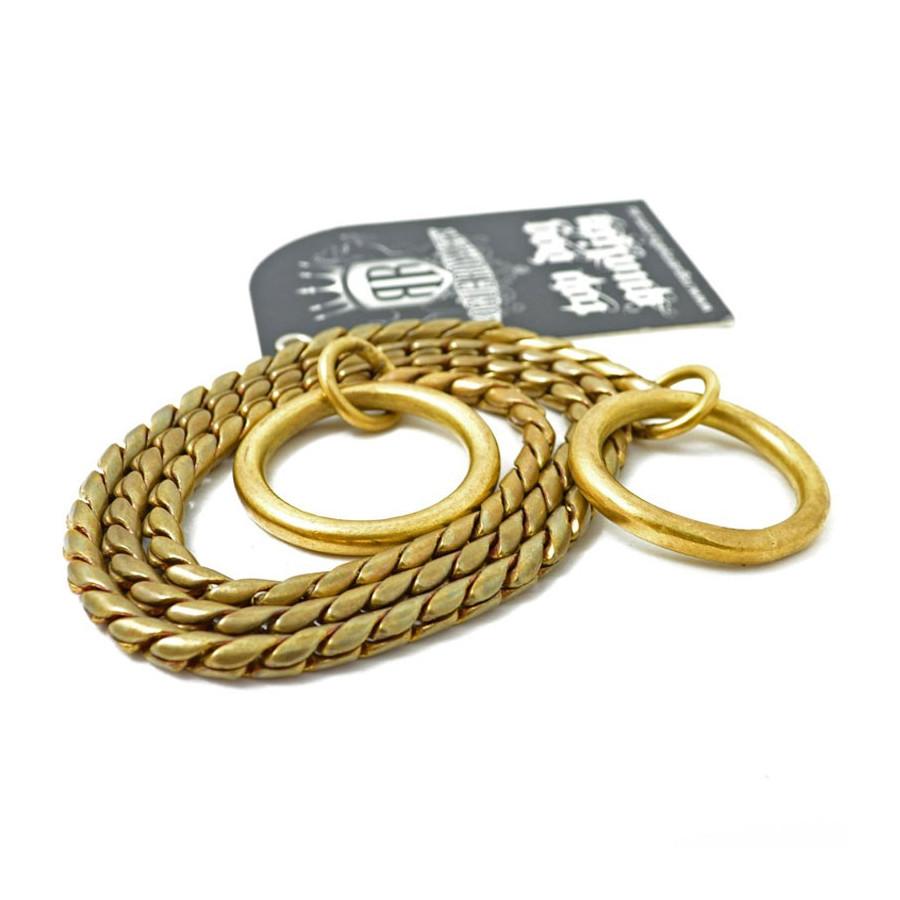
The same solid brass construction in four additional finish options. Chrome suits dogs wearing silver-hardware leather collars. Rose gold pairs with the Imperial slim fit collar range. Black suits the RuffNeck and studded collar lines. Gold pairs with the chain collar and chain leash range. Same two sizes, same flat-back engraving surface across all finishes.
From $15.50 each | View Chrome Dog Tag
Personalised Dog Collars: How Each Method Works
A personalised collar integrates identification information directly into the collar itself, removing the need for a separate hanging tag. The information cannot fall off with the tag, cannot rattle against the collar hardware, and cannot get caught on crate wire or kennel fencing. There are four distinct personalisation methods on the Australian market, each with different durability and readability characteristics.
Embossed or Stamped Leather
The name, phone number, or initials are pressed into the leather surface using a metal stamp or roller, then treated with ink or dye to increase contrast. This is one of the oldest personalisation methods on leather goods and one of the most durable. A properly embossed leather collar retains its identification marking for the life of the leather, which with correct conditioning is often the life of the dog. The limitation is the amount of text that can be legibly embossed on a collar width of 25mm to 45mm. Typically a name and a phone number is achievable; more than that becomes cramped.
Engraved Name Plate
A small metal plate, usually stainless steel or brass, is riveted or stitched directly onto the collar strap. The plate provides a flat, hard surface ideal for deep engraving. This method allows more text than embossing and is easily readable at a glance. The plate cannot be removed without damaging the collar, which means if your phone number changes the plate needs to be replaced along with the collar section it is attached to.
Embroidered Text
Thread stitched directly into the collar webbing, typically on nylon collars. The most common embroidery approach in Australia is the dog's name stitched in a contrasting thread colour along the collar length. Embroidery is waterproof, does not rust, and does not add hardware weight, making it popular for beach dogs and dogs that swim frequently. The limitation is legibility from a distance and the practical text size achievable on a 20mm to 25mm wide collar. A large phone number is difficult to embroider readably on a standard collar width.
Slide-On Name Plate
A metal plate with two slots that threads onto the collar strap, similar to a belt slide. This method allows the plate to be removed and replaced without damaging the collar, making it the most practical option if your contact details change. The plate sits flush against the collar strap without dangling or rattling. The thread-on design means the plate cannot be lost independently of the collar the way a hanging tag can.
Pairing Tags with the Right Collar for Maximum Identification
A tag is only as reliable as the hardware it clips to. The ring that attaches the tag to the collar needs to be large enough that the tag cannot work itself free during normal wear, and the D-ring on the collar needs to be positioned so the tag hangs cleanly rather than twisting and wedging under the collar strap.
Cheap split rings from craft stores open under repeated pressure, particularly when a dog shakes or rolls on a hard surface. A standard split ring applies and releases like a keyring, which means repeated twisting gradually opens the gap. A welded ring or a solid jump ring does not have this weakness but requires a tool to install and remove the tag. Most owners use split rings by necessity; the practical answer is to check the ring for opening weekly and replace it before the gap becomes wide enough to lose the tag.
The handmade leather collars in the Rogue Royalty leather collar range carry solid D-rings at appropriate widths for each collar size. A wide-fit collar for a large breed has a D-ring sized for the tag weight and the leash load without the tag interfering with leash attachment. The slim-fit range for small breeds carries proportionally smaller and lighter hardware so a 22mm tag sits correctly rather than dragging the collar sideways.
Why Both a Tag and a Personalised Collar Give the Best Outcome
The strongest identification setup for any Australian dog is both a personalised collar and a separate engraved tag. Here is why each layer matters independently.
The collar personalisation, whether embossed leather or a name plate, provides identification that cannot fall off independently of the collar. If a tag ring opens and the tag is lost in long grass, the collar still carries the dog's name and potentially a phone number. If the collar is removed by a well-meaning finder trying to check a tag that fell off, the personalisation is still attached to the collar.
The separate hanging tag provides a phone number that can be updated without replacing the collar. When circumstances change, a new $15.50 tag with current engraving replaces the outdated one without requiring a new collar.
Both working together means the dog carries redundant identification through two separate systems. Either one alone is adequate under normal conditions. Both together cover the edge cases that bring dogs to shelters when one system fails.
Solid aged brass tags in five finishes from $15.50. Handmade leather collars from Chihuahua to Great Dane with solid hardware throughout. Every piece built to last and matched across finishes.
Browse All Dog Tags →How to Check Your Dog's Current Tag Is Still Working
Most Australian dog owners check their dog's tag once, when they first attach it, and never again. Over the following months and years the tag corrodes, the engraving fades, the split ring opens slightly, and the phone number becomes outdated. None of this is visible from the outside until someone tries to read it in a lost-dog situation and cannot.
A monthly tag check takes fifteen seconds. Unclip the tag from the collar. Hold it at arm's length in normal indoor light. Read the phone number out loud. If you have to move the tag closer, squint, or tilt it toward a light source to read it, the engraving is no longer adequate for a lost-dog situation where a stranger needs to read it quickly outdoors. Check the split ring for any visible gap. Confirm the phone number on the tag is still the number you answer most often. Replace the tag if any of these checks fail.
Tag replacement at $15.50 is the cheapest safety investment in a dog owner's budget. Waiting until a tag fails in the field is the alternative.
Matching Your Dog's Complete Kit
A collar, tag, harness, and leash used together daily are more visually coherent and practically effective when the hardware finishes match. A brass tag on a collar with brass buckles and a brass-clipped leash is a complete kit. A chrome tag on a collar with rose gold hardware is not.
The Rogue Royalty tag range covers the five hardware finishes used across the collar, harness, and leash ranges: brass, chrome, rose gold, black, and gold. For owners building a complete kit, the correct approach is to choose the hardware finish first based on the collar, then select the matching tag finish, then match the leash hardware to the same finish.
For leather collar owners, the handmade Classic leather collar range comes in both brass and chrome hardware across the wide, regular, and slim fit profiles. The Ruthless and RuffNeck studded lines come in brass, chrome, and rose gold. Every tag finish in the range has a matching collar hardware option, so the identification setup can be a deliberate part of how the dog is kitted rather than an afterthought.
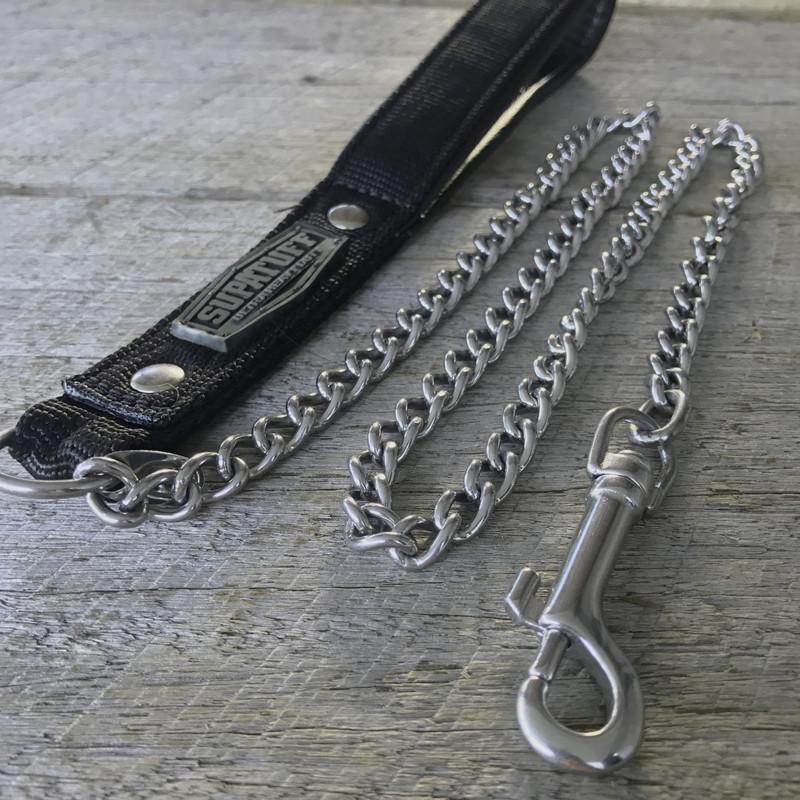
For the harness range, the Attila leather harness uses solid brass fittings, matching directly with the brass tag. The SupaTuff harness range uses stainless steel hardware, which pairs with the chrome tag finish.
Frequently Asked Questions About Dog Tags and Personalised Collars in Australia
Is a dog tag legally required in Australia?
Yes, in most states dogs must wear a tag with owner contact details when off the owner's property. In NSW, dogs must wear a tag showing the owner's name and an address or phone number. In Victoria, registered dogs must wear their council registration tag outside the premises. In WA, the Dog Act requires a collar with a registration tag and the owner's name and address in public places. Requirements vary by state and council. A personalised collar or ID tag is the simplest way to meet these requirements while also speeding up reunification if your dog is found.
What information should I put on my dog's tag in Australia?
Put your mobile phone number first, in the largest and clearest engraving possible. Then add your dog's name. Add suburb and postcode if space allows. Avoid your full home address for privacy. Add MICROCHIPPED only if engraving space and font size remain readable after the priority information. The phone number is what gets a dog home; everything else is secondary.
Does a microchip replace the need for a dog ID tag in Australia?
No. A microchip can only be read by a scanner held by a vet, shelter, or ranger. A tag can be read by any member of the public who finds your dog. NSW legislation specifically requires dogs to wear a tag with owner contact details even when microchipped. Both serve different functions and both are needed for complete identification coverage.
What is the difference between an engraved dog tag and a printed tag?
Deep engraving cuts a physical groove into the metal that stays readable as the tag ages and wears. Printed or surface-etched tags apply marking to the top layer only, which fades within one to two years of daily outdoor use. For a tag worn daily through walks, beach visits, and rough play, deep engraving into solid brass or stainless steel is significantly more durable.
What is the best material for a dog tag in Australia?
Solid brass and stainless steel are the two best choices for Australian conditions. Brass does not rust and holds deep engraving clearly for years. Stainless steel handles salt water and coastal conditions marginally better. Both significantly outperform aluminium and zinc alloy, which scratch more easily and lose legibility faster under daily outdoor use. Rogue Royalty offers solid brass tags in five finishes: classic brass, chrome, rose gold, black, and gold.
What is a personalised dog collar and how does it differ from a collar with a tag?
A personalised collar has identification built directly into the collar itself through embossed name plates, embroidered text, or riveted metal plates. The information cannot fall off separately. The disadvantage is that permanent personalisation methods cannot be updated if your phone number changes. A hanging tag is replaceable when contact details change. Using both gives the strongest identification setup: the collar carries the dog's name permanently, and the replaceable tag carries the current phone number.
Do Rogue Royalty dog collars come personalised?
Rogue Royalty offers solid brass, chrome, rose gold, black, and gold dog tags that attach to any collar with a flat back ready for engraving by a local engraver. The leather collar range is designed with D-rings sized to hold a tag securely at the correct weight for each collar profile. Tags and collars are available in matching hardware finishes across all five options so the complete identification setup can be a coordinated kit.

