





The 25-degree rule is the standard advice most Australian dog owners have heard. What most haven't heard is that it applies to air temperature, and on a sunny 25-degree day, the asphalt your dog is walking on can be at 52 degrees. That gap between the temperature you feel and the temperature your dog's paws contact is where most summer walking injuries happen, because the owner feels fine and assumes the dog is fine too.
This guide covers the pavement temperature data with exact figures, the 7-second test and why it works, the humidity variable that changes the air temperature rule, which breeds face the highest risk and why, the full progression of heatstroke warning signs, and the most common first-aid mistake that makes heatstroke worse rather than better.
The Pavement Temperature Gap: What the Numbers Actually Show
Air temperature and surface temperature are not the same number, and the difference is significant enough to matter for paw safety. Four Paws Australia data puts pavement surface temperature at roughly double the air temperature on a sunny day: a 25-degree air temperature corresponds to approximately 52 degrees on asphalt, and a 31-degree air temperature can mean 62 degrees at ground level.
| Air Temperature | Approx. Asphalt Surface Temp | Time to Cause Paw Burns |
|---|---|---|
| 25°C | ~52°C | Under 60 seconds |
| 31°C | ~62°C | Under 30 seconds |
| 35°C+ | 70°C+ | Near-immediate on contact |
The surface temperature depends on more than air temperature alone. Asphalt absorbs and retains heat more efficiently than concrete, and significantly more than grass or soil. A surface that has been in direct sun for hours holds heat well after the air temperature drops, which is why an evening walk at 6pm after a 38-degree day still requires the hand test rather than assuming it is safe based on the cooler air temperature alone.
The 7-Second Test: How to Do It and What to Do With the Result
Place the back of your hand flat on the pavement surface you intend to walk on. Hold it there. If you cannot hold it comfortably for seven seconds, the surface is too hot for your dog's paw pads. If it is too hot for the back of your hand, it will burn tissue that cannot tolerate that heat without injury.
This test needs to be applied at the actual location and time of the walk, not estimated from a weather forecast or the air temperature reading. Test the darkest surface you will be crossing, typically the centre of an asphalt road, since it absorbs the most heat. Test in the sun, not the shade, because your dog will likely walk through both. If any section of the planned route fails the test, the route is too hot, not just the part that feels uncomfortable.
Humidity Changes the Air Temperature Threshold
The 25-degree air temperature threshold is based on conditions where panting can work efficiently. Dogs cool themselves almost entirely through panting, which works by evaporating moisture from the respiratory tract. In high humidity, the air already holds significant moisture, which limits how much additional moisture can evaporate from panting, reducing its cooling efficiency.
On a humid day, the effective risk threshold drops below 25 degrees. A 22-degree day with 90 percent humidity can be more dangerous than a 28-degree day with 30 percent humidity, because the dog's cooling mechanism is compromised by the environmental moisture. Australian coastal cities, including Brisbane, Sydney, Darwin, and Cairns, regularly see high-humidity summer conditions where the air temperature alone is a poor guide to actual risk.
The practical adjustment: on any day when the air feels heavy, thick, or when you feel significantly less comfortable than the temperature number suggests, apply the same caution you would at a higher temperature. If you are sweating heavily at 24 degrees, your dog is likely struggling to cool at the same temperature.
Breeds at Highest Risk: Why Their Anatomy Changes the Equation
Not all dogs face the same heat risk at the same temperature. The breeds and conditions most likely to develop dangerous heatstroke quickly are those whose cooling mechanisms are compromised by anatomy or physiology, and Australian owners of these dogs need lower walk temperature thresholds than general guidance suggests.
Brachycephalic Breeds
French Bulldogs, Pugs, English Bulldogs, Boston Terriers, Bulldogs, and Cavalier King Charles Spaniels have compressed airways that physically limit how much air they can move through panting. A dog that pants rapidly but moves limited air volume per pant is a far less efficient heat exchanger than a dog with a full-length airway. RSPCA veterinary guidance recommends avoiding outdoor exercise entirely for brachycephalic breeds in temperatures above 25 degrees, lower than the threshold applied to healthy non-brachycephalic breeds.
Senior Dogs, Puppies, and Dogs With Health Conditions
Older dogs have reduced cardiovascular efficiency, meaning the circulatory system cannot distribute heat from the body core to the skin for dissipation as effectively as in younger animals. Puppies cannot thermoregulate as reliably as adult dogs. Dogs with existing heart disease, respiratory conditions, obesity, or any condition affecting circulation face elevated risk at all temperatures above 23 degrees.
Double-Coated and Dense-Coated Breeds
Huskies, Malamutes, Samoyeds, Chow Chows, and similar dense-coated breeds carry significant insulation that works in reverse during summer, trapping body heat rather than the cold it is designed to resist. These breeds can overheat faster than the ambient temperature suggests even in moderate conditions. They should not be shaved, as the coat also reflects sunlight and provides some thermal protection, but their exercise in summer should be significantly limited compared to other breeds of similar size.
Heatstroke Warning Signs: Early vs Late Stage
Most dog owners can recognise severe heatstroke. Fewer catch the early signs that allow intervention before the condition becomes critical, and the window between early and late stage can be short in vulnerable dogs or high temperatures.
Early Warning Signs
Heavy panting that persists even at rest, excessive drooling beyond what is normal for the individual dog, restlessness or an inability to settle, actively seeking shade or cool surfaces, and gums that appear brighter red than usual are the early indicators. At this stage, the dog's body is working to cool itself and is not yet overwhelmed. Moving the dog to shade or an air-conditioned environment immediately and offering water to drink, not forcing it, gives the cooling system a chance to catch up.
Late Warning Signs Requiring Immediate Veterinary Attention
Very dark red or pale or blue-tinged gums indicate the circulation is failing. Wobbliness, staggering, or collapse indicates neurological involvement. Vomiting, particularly if repeated, indicates the digestive system is shutting down. Loss of consciousness is a critical emergency. Any late sign requires calling an emergency vet immediately and beginning first aid on the way rather than waiting.
The Cold Water Mistake That Makes Heatstroke Worse
This is the most critical, most commonly misapplied piece of heatstroke first aid, and it is not covered in most general pet safety articles. Many dog owners' instinct when a dog is overheating is to apply cold water or ice to cool it rapidly. This is the wrong response and can worsen the condition or contribute to death.
Cold water and ice cause the blood vessels near the skin surface to constrict, a physiological response called vasoconstriction that reduces blood flow to the skin. The skin is one of the primary routes through which the body sheds heat to the outside environment. When vasoconstriction reduces blood flow to the skin, heat that needs to escape from the body core is instead trapped inside, causing core body temperature to rise further even as the dog's skin surface feels cooler to the touch.
Grass Seed Risk: The Australian Summer Walking Hazard Most Guides Skip
Switching from sealed pavement to grass paths in summer is the right move for paw temperature. It introduces a different hazard that is common in Australian conditions and rarely mentioned in summer heat walking guides: grass seeds.
In late spring and summer across most of Australia, dried grass seeds from species including barley grass, spear grass, and foxtail become airborne or lie on the ground at the precise height of a dog's paw level and lower body. These seeds are designed by evolution to burrow in one direction, driven by their sharp tip and ratchet-like surface structure. Once they enter a dog's paw, ear canal, eye, or between toes, they continue travelling inward with each movement rather than working their way back out.
Where Grass Seeds Enter the Body
The spaces between the toes are the most common entry point, specifically the soft skin at the webbing between toes where the seed tip can penetrate easily. The paw is also the location where entry is hardest to notice initially, since the seed enters under fur and may not be visible without careful parting of the hair between each toe. Entry in the ear canal is common in dogs with pendulous or heavily furred ears. Eyes and nostrils are less common entry points but occur in dogs that push their face low through grass.
Signs that a grass seed has entered a paw include: sudden onset limping on one paw after a grass walk, excessive licking of one specific foot, swelling or a small lump between toes, or a small puncture wound with redness. Once a seed has travelled far enough inward, it may migrate into tendons, joints, or even into the body cavity through the limb, requiring surgical removal. The cost and complexity of removal increases significantly with time, which is why checking paws immediately after every grass walk in summer is the practical prevention rather than waiting for visible symptoms.
The Post-Walk Grass Seed Check
After every walk on grass during late spring and summer, run fingers slowly through the fur between each toe, pressing down to feel for seeds before they penetrate skin. Check under the ears by gently running a finger along the inner ear flap and pinna. If the dog has a long coat or feathering on the legs, run hands up the leg from foot to shoulder, feeling for seeds caught in the fur before they work their way to the skin.
Dogs with feet trimmed close to the skin, the styling called poodle-clip feet by groomers, are easier to check and harder for seeds to penetrate initially because there is less fur to catch and hold the seed near the skin. This is one practical reason some owners of grass-walking summer dogs choose this trim for summer months specifically.
When to Skip the Walk Entirely
On days where the air temperature is forecast above 32 degrees, the practical and medically supported answer for most dogs is to skip the outdoor walk and substitute indoor exercise and mental enrichment. Puzzle feeders, training sessions, indoor play, and enrichment activities provide exercise and stimulation without heat risk. A missed walk causes no harm. A heatstroke episode can cause permanent organ damage or death.
The dogs that most need this adjustment are the same dogs whose owners are often most reluctant to make it: high-energy breeds that seem to want to walk regardless of temperature, and dogs with established walking routines that show stress when the routine is broken. The dog's enthusiasm for going outside at 38 degrees is not evidence that it is safe to go. Dogs are not reliable judges of their own heat tolerance, and many will continue chasing a ball or running in heat that is already dangerously overloading their cooling system.
Gear Considerations for Summer Walking
Equipment choices matter more in summer conditions than in temperate weather, specifically for walks near water, beach environments, and conditions where the gear will get wet and then need to perform again.
Leather collars and leashes absorb water during beach or creek outings and require drying and conditioning before they will again perform correctly. The leather aftercare guidelines cover this specifically, but repeated salt-water immersion without drying and conditioning between outings shortens leather's working life significantly.
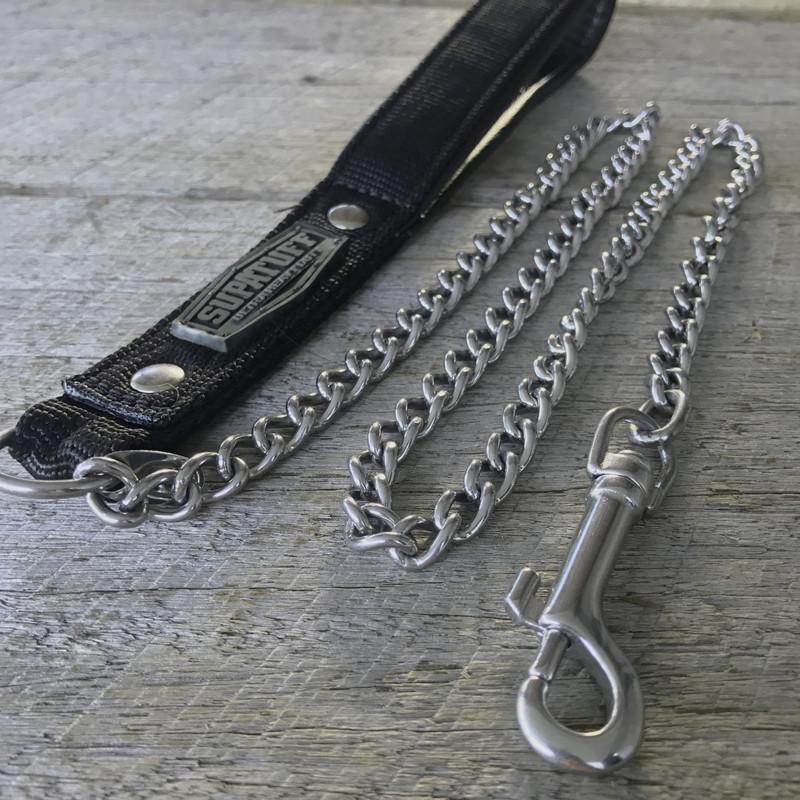
For dogs that swim, wade in creeks, or walk through surf zones, the SupaTuff waterproof range is the more practical choice for summer because the custom nylon webbing and all-stainless hardware are unaffected by saltwater, dry quickly, and require no maintenance between uses. The SupaTuff heavy-duty collar and SupaTuff bullsnap leash cover the everyday summer walking setup for dogs in coastal and high-activity environments.
For early morning walks where the dog is on a longer lead through parks and reserves, a 5-metre long-line lead allows the dog to explore grass surfaces and stay off hot pavement, covering more sniff-distance without keeping the dog close to hot footpaths. All lengths and materials for every summer walking context are in the range linked at the bottom of this page.
SupaTuff nylon collars and leashes in all hardware stainless steel, with no leather to dry and condition between salt-water outings. Built for Australian coastal conditions.
Browse the Waterproof Leash Range →Frequently Asked Questions About Walking Dogs in Australian Summer Heat
How hot is too hot to walk a dog in Australia?
RSPCA Australia guidance cites 25 degrees Celsius as the threshold above which most dogs should not be walked in the heat of the day. The pavement temperature is the more direct risk: at 25 degrees air temperature, asphalt can reach 52 degrees, hot enough to cause paw burns within a minute. Humidity matters as much as temperature since dogs cool through panting, and high humidity reduces panting's effectiveness. A humid 23-degree day can be more dangerous than a dry 28-degree day.
How do I check if the pavement is too hot for my dog?
Place the back of your hand flat on the pavement and hold it there for seven seconds. If you cannot hold it comfortably, the surface is too hot for paw pads. Test on the actual walking surface at walk time, specifically on the darkest asphalt section in direct sun. Evening walks after a hot day still require the test, as asphalt retains heat well after air temperature drops.
What are the early warning signs of heatstroke in dogs?
Early signs include persistent heavy panting that doesn't slow at rest, excessive drooling, restlessness, repeatedly seeking shade or cool surfaces, and bright red gums. Late emergency signs include very dark red or pale or bluish gums, wobbliness or collapse, vomiting, and loss of consciousness. Any late signs require calling an emergency vet immediately while beginning first aid.
Should I use cold water or cool water to treat a dog with heatstroke?
Cool water only, never cold water or ice. Cold causes vasoconstriction at the skin surface, reducing blood flow to the skin, which is where the body sheds heat. This traps heat inside the body and can worsen the condition. Apply cool water to the paws, groin, armpits, and neck. Use moving air to aid evaporation. Get to a vet regardless of apparent improvement.
Which dog breeds are most at risk in Australian summer heat?
Brachycephalic breeds (French Bulldogs, Pugs, English Bulldogs, Cavalier King Charles Spaniels) face the highest risk due to compromised panting capacity. Senior dogs, puppies, dogs with heart or respiratory conditions, overweight dogs, and dense double-coated breeds (Huskies, Malamutes) also face elevated risk. For brachycephalic breeds, many vets recommend avoiding outdoor exercise entirely above 25 degrees.
What is the safest time to walk a dog in Australian summer?
Before 9am is the safest window, with surfaces at their coolest and air temperatures at their lowest. Evening after sunset is the second-best option but requires the 7-second pavement test, as surfaces can stay hot well into the evening after a very hot day. The 10am to 6pm window is highest risk and should be avoided for most dogs. On days forecast above 32 degrees, skipping the walk and substituting indoor enrichment is the medically supported recommendation.
Does walking on grass instead of pavement make summer walks safer?
Yes, significantly. Grass stays cooler than asphalt by retaining moisture and not absorbing solar radiation at the same rate. Choosing shaded grass paths, natural trails, and parks over sealed footpaths reduces paw burn risk substantially. Sand is intermediate: cooler than asphalt in shade but can heat quickly under direct sun and should be tested with the hand test before walking.

