





Choosing a pitbull harness is more specific than choosing a harness for most other breeds. The American Pit Bull Terrier, the Staffordshire Bull Terrier, the Bull Arab, and similar muscular wide-chested breeds have a body structure that causes standard harnesses to fit incorrectly in predictable ways. Understanding why this happens, and what to measure and check before purchasing, saves the frustration of buying a harness that rotates, chafes, restricts movement, or allows the dog to slip free.
This guide covers the anatomical features that make harness fitting for pit bull type breeds different from general advice, how to measure correctly, what to look for in construction, when to use a harness versus a collar, and how the Rogue Royalty Active X harness and wide-fit collar range fit into a practical gear setup for APBT, Staffy, and Bull Arab owners in Australia.
Why Standard Harness Sizing Fails on Pit Bull Builds
Most harness size guides use weight as the primary sizing variable. For the average dog, weight correlates reasonably well with the chest and neck measurements that actually determine harness fit. For pit bull type breeds, this correlation breaks down.
An American Pit Bull Terrier or Staffordshire Bull Terrier is typically shorter and stockier than other breeds of similar weight. Their chest is noticeably wider relative to their overall body size, and their neck is shorter and more muscular relative to their head size. When a harness is sized by weight for a breed with this body structure, the chest panel is almost always too narrow for the actual width of the dog's chest at the sternum.
A chest panel that is too narrow cannot lie flat against the sternum. Instead, it sits forward of the sternum or angles to one side, causing two problems. First, the strap edges dig into the dog's armpit area rather than resting on either side of the chest, creating friction and chafing at every stride. Second, the harness rotates under the force of movement, shifting off-centre and reducing both comfort and the effectiveness of any leash attachment point.
The fix is not to size up in weight. The fix is to measure chest girth directly and choose a harness where that measurement falls in the middle of the size range.
How to Measure a Pitbull for a Harness
For pit bull type breeds, chest girth is the critical measurement. Take the tape measure and wrap it around the widest point of the chest, just behind the front legs. This is the circumference that the harness's main girth strap sits against in use. Write this number down and use it as the primary sizing reference.
The neck measurement and the body length measurement are secondary for these breeds. The chest girth will determine whether the chest panel of the harness can lie flat against the dog's sternum, which is the foundational fitting requirement for any harness to work correctly on a wide-chested dog.
After measuring, select the size where the chest girth measurement falls in the centre of the size range rather than at either extreme. This provides adjustment room in both directions as the harness straps settle into use and as the dog's body composition may change slightly with exercise over time.
The Pit Bull Body Type: What Makes These Breeds Different
Pit bull type breeds share a set of anatomical characteristics that affect harness fit more than they affect most other gear choices. Understanding these helps explain why a harness that works perfectly on a Labrador of similar weight may not work at all on an APBT or Staffy of the same weight.
Wide, Deep Chest
The chest of a pit bull type breed is both wider and deeper than the average dog of similar weight. The width at the broadest point of the ribcage is greater relative to the dog's height and overall length than in longer-bodied breeds. This width is what causes the chest panel sizing problem described above. For harness manufacturers who design around average proportions, the chest panel width that suits most medium-large dogs at a given weight is simply not wide enough for these breeds.
Short, Muscular Neck
The neck of an APBT or Staffy is proportionally shorter and more muscular than the neck of other breeds at similar weight. This means that the neck loop of a standard harness, sized for average proportions, sits either too high toward the throat or too far down toward the chest depending on the specific harness design. A neck loop sitting at the throat concentrates any forward leash force at the same point a collar would, defeating the purpose of using a harness at all.
Broad Head Relative to Neck
Pit bull type breeds have a broader skull relative to their neck circumference than many other breeds. This means that a harness that is loose enough to fit over the head but then adjusted snugly around the neck can still be escaped by a dog that backs up and lowers their head. The geometry of the broad skull relative to the fitted neck position creates an exit route that does not exist on breeds with a more uniform taper from head to neck.
High Drive and Physical Strength
Pit bull type breeds are high-drive dogs with significant physical strength relative to their size. The forces they generate during reactive events, sudden changes of direction, or excited greetings are substantially higher than the same forces generated by lower-drive breeds of similar weight. Harness hardware that is adequate for a calm medium-sized breed may not be adequate for an excited Staffy or APBT at full enthusiasm. This is why metal hardware at the D-ring and leash attachment is not optional for these breeds.
Harness vs Collar: Which Does What for Pit Bull Type Breeds
The harness versus collar question for pit bull type breeds has a practical answer that most guides oversimplify. Both have a role in a well-equipped dog owner's setup, and the question is not which is better in general but which is better for each specific use.
When to Use the Harness
A harness is the appropriate leash attachment for walks, training sessions, and any active exercise where the dog generates significant leash force. For pit bull type breeds in particular, a harness distributes this force across the chest and shoulders rather than concentrating it at the neck. For a breed with the muscular neck and throat of an APBT or Staffy, this distribution is relevant to the dog's long-term comfort and the handler's control during reactive or excited moments.
The harness is also more appropriate than a collar for dogs that pull, because the mechanics of leash attachment at the chest allow the handler to redirect the dog's direction more effectively than a collar attachment at the neck allows. A dog pulling against a collar leans forward and can use its body weight as leverage. A dog pulling against a chest harness is redirected sideways toward the handler, which interrupts the forward momentum.
When to Use the Collar
A collar is the appropriate everyday wear item for identification, ID tag attachment, and short handler interactions that do not involve active exercise. A collar is practical where a harness would be inconvenient: the dog sleeping in the house, a quick lead-up interaction in the yard, or a vet check where the harness would need to be removed anyway.
For pit bull type breeds, a wide-fit collar with all-metal hardware at the D-ring is the correct everyday collar specification. The wide profile distributes any collar force across a larger neck contact area, and the all-metal hardware handles the sudden peak forces these breeds generate without the fracture risk that plastic hardware carries. The collar should be properly fitted: the two-finger check applies here as well, and the collar should not be so loose that it can be backed out of.
What to Look for in a Pitbull Harness
Wide Chest Panel
The chest panel is the horizontal band that runs across the dog's sternum. For pit bull type breeds, this panel must be wide enough to sit flat across the full width of the chest without being pushed into the armpit area. Check that the panel width specification in the size guide matches the actual measured width of your dog's chest at the sternum before purchasing.
Adjustable Girth Strap
The girth strap is the band that wraps around the dog's body behind the front legs. For pit bull type breeds whose chest depth can be significant, the girth strap must have enough adjustment range to cinch correctly behind the legs without either sitting too loose or digging into the belly. A girth strap with at least two inches of adjustment range in each direction from the correct fit position provides the margin needed as the dog conditions and develops.
All-Metal Hardware at the Leash Attachment
The D-ring or O-ring at the leash attachment point carries the full dynamic load generated during every walk. For high-drive pit bull type breeds, this load can be substantial during reactive moments. Metal hardware, whether solid stainless steel or solid brass, handles these peak loads without the sudden brittle failure that plastic D-rings produce under overload. Any harness for a pit bull type breed should use metal hardware at every connection point.
Full Shoulder Extension
A harness that restricts the dog's shoulder movement at full stride is a harness that causes long-term discomfort and is likely to be resisted by the dog during future fittings. Check that the straps do not cross over the shoulder blades at any point in the stride. The correct harness position for any breed keeps the strap channels behind the shoulder blades, not crossing over them.
Pitbull Harness Sizing: A Practical Reference
| Breed | Typical Chest Girth | Notes |
|---|---|---|
| Staffordshire Bull Terrier (adult male) | 55cm to 75cm | Wide chest relative to height; measure at widest ribcage point, not neck |
| Staffordshire Bull Terrier (adult female) | 50cm to 65cm | Same proportional considerations as male; still wider than same-weight average breeds |
| American Pit Bull Terrier (adult male) | 65cm to 85cm | Larger overall than Staffy; same body proportions; measure carefully at sternum width |
| American Pit Bull Terrier (adult female) | 58cm to 78cm | Same proportional considerations; girth is primary measurement |
| Bull Arab (adult) | 70cm to 95cm | Larger and longer than Staffy/APBT; still wide-chested; measure at widest point |
| German Shepherd (adult male) | 65cm to 80cm | Deeper chest; longer body than pit bull types; proportions closer to average breed sizing |
These are typical ranges, not universal sizes. Always measure the individual dog and select the size where that measurement falls in the middle of the manufacturer's range.
Australian Conditions and Pitbull Harness Use
Australian conditions introduce specific considerations for pit bull harness use that general guides written for northern hemisphere markets do not address.
Staffies and APBT in Australia face summer temperatures that make any harness session more physically demanding than the same session in cooler conditions. A harness covers a portion of the dog's torso, which adds insulation at a time when the dog's primary heat dissipation mechanism is breathing rather than sweating. For summer walks in hot Australian conditions, schedule harness sessions for early morning or late evening. Carry water. Monitor the dog's breathing rate and pace. If the dog slows, seeks shade, or breathes faster than normal, stop the session.
Australian UV levels also affect hardware. Plastic buckles and D-rings degrade under sustained UV exposure in a way that is faster in Australian outdoor conditions than in northern hemisphere use. For dogs that are outdoors regularly in Australian conditions, all-metal hardware is the practical choice rather than simply the strength choice.
Why Choose Rogue Royalty for a Pitbull Harness and Collar
Rogue Royalty has been building dog gear for high-drive, powerful, and active breeds in Australia since 2009, with over 30,000 customers using the collar and harness range in daily active use. The APBT, Staffordshire Bull Terrier, and Bull Arab are among the most common breeds in the Rogue Royalty customer base, and the product range reflects the specific requirements of these breeds: wide-fit collars for the broad necked muscular builds, all-metal hardware throughout, and active harness construction that allows full shoulder extension rather than restricting it.
The Rogue Royalty Pitbull Harness and Collar Range
Active X Dog Harness
For: Staffies, APBTs, Bull Arabs, and German Shepherds in active everyday use; distributes leash force across chest and shoulders; full shoulder extension at all gaits
Built for active, high-drive breeds. Chest-distributed leash force prevents neck strain. Full freedom of movement across the shoulder joint. Solid metal hardware at leash attachment. Sized for muscular wide-chest builds.
SupaTuff Strong Dog Collar (Wide Fit)
For: everyday wear alongside the harness; ID tag attachment and backup control for APBT, Staffy, and Bull Arab builds needing wide-fit with all-metal hardware
Double-ply SupaTuff nylon. All-stainless hardware. Wide-fit profile for muscular breed necks. No plastic at any load-bearing point. Waterproof. Lifetime guarantee.
From $69.60 AUD | View the SupaTuff Wide Fit Collar
SupaTuff SECURITY Collar
For: working, training, and high-drive pit bull type breeds requiring the highest-specification collar with double-pronged stainless buckle and solid stainless D-ring
Double-ply waterproof SupaTuff nylon. Double-pronged all-stainless buckle. Solid stainless D-ring. No plastic. 48mm wide-fit profile. Lifetime guarantee.
$76.00 AUD | View the SupaTuff SECURITY Collar
Wide Fit Leather Collar Range
For: everyday wear for Staffies, APBTs, and Bull Arabs in dry conditions; full-grain bridle leather with solid brass hardware and napa calfskin inner for comfort on muscular necks
Full-grain bridle leather. Solid brass hardware. Napa calfskin inner. Small through XXXL. 10-year craftsmanship warranty. Develops conforming fit over time.
From $66.50 AUD | Browse the Wide Fit Leather Collar Range
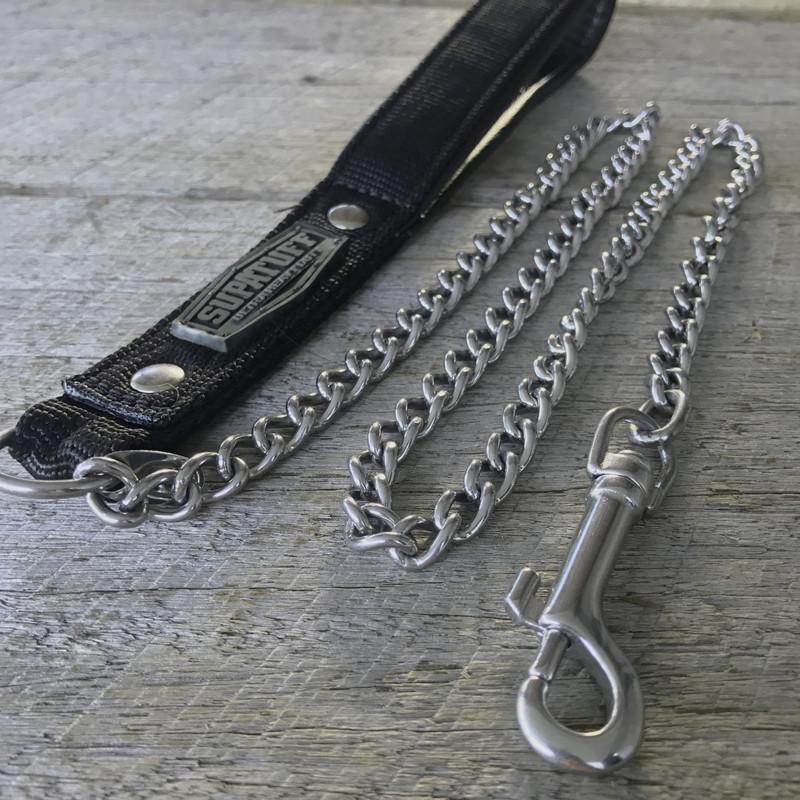
Pair any harness or collar with a matched lead from the Rogue Royalty dog leash range in all-stainless hardware to complete the gear setup for your pit bull type breed.
Active X harness, SupaTuff wide-fit collars, and leather collars built for APBT, Staffy, and Bull Arab builds. All-metal hardware. No plastic.
Browse the Full Working Dog Gear Range →What Pitbull Dog Owners Say About Rogue Royalty
Rogue Royalty's wide-fit collars and SupaTuff range are among the most popular choices for Staffy, APBT, and Bull Arab owners across Australia. Here is what customers who own high-drive and muscular breeds say about the gear.
Thick, well made, durable and padded on the inside for comfort. Its such a beautiful collar! The leather is great for my dogs sensitive skin and she looks badass!
I absolutely love this colour on my girl and the quality is great ..ideal for a girl like mine who loves hanging off the back of the ute.
Love the quality, and the design, and our looks awesome, thanks
Amazing quality collars!
Great product and service
Frequently Asked Questions: Pitbull Harness
What is the best harness for a pitbull?
One that fits the wide chest and short neck proportions correctly. Standard harnesses sized by weight produce a chest panel too narrow for pit bull chest width, causing the straps to ride into the armpits. A harness with a wide chest panel that sits flat at the sternum, adjustable girth straps, and metal leash attachment hardware distributes force correctly for this body type. The Rogue Royalty Active X Dog Harness is built for this build.
Should a pitbull wear a harness or collar?
Both have a role. Use the harness for walks and training sessions where leash force is generated, as it distributes that force across the chest rather than the neck. Use a wide-fit collar for everyday wear, ID tags, and short interactions. Both should be correctly fitted to the individual dog's measurements using the two-finger check after fitting.
How do I measure my pitbull for a harness?
Measure chest girth at the widest point, just behind the front legs. This is the primary sizing measurement for pit bull type breeds, not weight or neck size. Select the size where this measurement falls in the middle of the range. Apply the two-finger check under every strap after fitting. Re-check after the first 15-minute walk as straps settle into position.
Why do harnesses slip or rotate on pitbulls?
The chest panel is too narrow for the actual width of the dog's chest at the sternum. The fix is a harness with a wider chest panel, not tighter adjustment. For wide-chested breeds like APBT and Staffy, a harness with an adjustable girth strap and a wide chest panel that can lie flat against the sternum resolves the rotation problem that narrow-panel harnesses create.
Is a pitbull harness suitable for Australian conditions?
Yes, with heat management. Schedule harness walks for early morning or late evening in summer. Carry water. In temperatures above 28 degrees, limit sessions to 20 minutes. In temperatures above 33 degrees, use a standard lead on a shorter slower walk instead. Use lightweight harness construction and all-metal hardware that does not degrade under Australian UV.
Can a pitbull escape from a harness?
Yes, if incorrectly fitted or designed for a different body shape. The broad head relative to neck circumference creates an escape route when a harness is too loose or positioned too far forward. A correctly fitted harness with the girth strap behind the front legs and the chest panel sitting flat at the sternum significantly reduces escape risk for pit bull type breeds.
What collar should a pitbull wear alongside a harness?
A wide-fit collar with all-metal hardware. The wide profile distributes collar force appropriately for the muscular neck of an APBT or Staffy. The collar serves as ID tag attachment and backup control while the harness handles active leash use. Solid brass or all-stainless D-ring hardware handles the peak forces these breeds generate.

