





A weighted dog vest to stop jumping is not a magic fix, and no responsible guide will tell you it is. But it is a tool that addresses two of the root causes behind problematic jumping in dogs: excess energy that has nowhere to go, and a low level of body awareness that makes impulsive movement the dog's default. Understanding how a weighted vest works on both of these makes it much easier to use it effectively alongside training, rather than expecting it to solve the problem on its own.
This guide covers how a weighted dog vest reduces jumping through proprioceptive feedback and energy management, why it is different from a calming anxiety wrap, which Australian breeds benefit most, the safety protocol for introducing one correctly, how to size and load it for jumping management rather than fitness competition, and the Rogue Royalty canine weight vest range built specifically for Australian conditions.
Why Dogs Jump and What Drives the Behaviour
Dogs jump for a narrow set of reasons, and identifying which one applies to your dog determines which approach works best. Most jumping in pet dogs falls into two categories: excitement-based greeting jumping and demand jumping.
Excitement-based jumping is the most common. The dog is highly aroused when you arrive home, when guests enter, or at any environmental trigger that spikes their excitement. The jumping is not aggressive or dominant. It is social, enthusiastic, and poorly controlled. The dog is not making a choice to jump in any deliberate sense. They are just moving impulsively at peak arousal, and jumping happens to be what their body does at that moment.
Demand jumping is more targeted. The dog jumps at a specific person because jumping has historically produced the result they want: attention, a treat, or the person moving. This is a learned behaviour reinforced by the response it gets.
A weighted dog vest addresses the first type more directly than the second. It works on the arousal state and energy level that make impulsive jumping so difficult to manage. It does not address the reinforcement history that drives demand jumping, which requires consistent training regardless of what the dog wears.
How a Weighted Dog Vest Helps Stop Jumping: Two Mechanisms
A weighted vest works on jumping through two separate but complementary mechanisms. Understanding both helps you use the vest at the right time and in the right way.
Mechanism 1: Proprioceptive Feedback and Body Awareness
Proprioception is the nervous system's ability to sense where the body's limbs are in space without looking at them. It is what allows you to walk in the dark without falling over, and it is what allows a dog to navigate complex terrain without consciously analysing each footstep. Proprioceptive awareness is heightened when the body is under resistance load. A weighted vest increases the sensory feedback the dog receives from their own body during movement.
When a dog is at peak excitement with no body awareness, they move impulsively. Their attention is entirely on the external stimulus and their body moves without conscious moderation. A weighted vest introduces a physical input that the dog's nervous system has to process: the weight is felt at every stride, every directional change, every attempt to launch. This does not stop jumping through restraint. It heightens the dog's awareness of their own body movements, which slightly increases the cognitive processing required before impulsive actions like jumping.
The effect is subtle rather than dramatic. It is most useful as part of a walk or exercise session before a situation where jumping is a problem, rather than worn during the triggering event itself. A dog that has just completed a 30-minute walk in a weighted vest arrives home or at a greeting in a fundamentally different arousal state than a dog that has not been exercised.
Mechanism 2: Accelerated Energy Expenditure
The more direct effect of a weighted vest on jumping behaviour is through energy management. A dog wearing a weighted vest uses significantly more energy per unit of exercise than the same dog walking or running without the vest. The additional resistance requires more muscular effort for every stride. A 30-minute walk with a loaded vest produces greater physiological fatigue than a 30-minute unweighted walk.
This matters for jumping because jumping in excited dogs is, at its core, an energy expression. A dog with excess energy that has not been adequately expended has nowhere for that energy to go except into the most immediately available outlet: jumping, barking, running circuits, or general chaos at the front door. A dog that has adequately expended its energy through weighted exercise reaches a calmer physiological state where the arousal threshold for jumping is simply higher.
Weighted Vest vs Calming Anxiety Wrap: What Is the Difference?
The calming anxiety wrap (often called a thunder shirt or anxiety vest) and a weighted training vest are frequently confused in online discussions because both are worn on the dog's body and both can reduce overexcited behaviour. They work through entirely different mechanisms and suit different situations.
Calming anxiety wraps apply gentle, even compression across the torso without adding weight. The compression mimics the calming effect of being held, activating the parasympathetic nervous system response and reducing anxiety or fear-driven behaviour. It is worn during or immediately before a stressful event: a storm, fireworks, a vet visit, or travel. It is most effective for anxiety-driven behaviour and is not a physical training tool.
A weighted dog vest adds actual physical load to the body, increasing the physical demands of movement without providing compression therapy. It is worn during exercise sessions to accelerate energy expenditure and increase proprioceptive body awareness. It is a training and conditioning tool, not an anxiety management tool.
For jumping driven by excitement and excess energy, the weighted vest is the relevant tool. For jumping driven by anxiety or fear responses (a dog that jumps when frightened rather than when excited), addressing the anxiety is the priority. The weighted vest does not treat anxiety.
Which Australian Dog Breeds Benefit Most from a Weighted Vest to Reduce Jumping
High-energy breeds with strong instincts to move, work, and interact produce the most dramatic results from weighted vest exercise in terms of post-session arousal reduction. In the Australian context, these are the breeds most commonly reported as problematic jumpers.
Labradors and Golden Retrievers
Both breeds have high social arousal and jump primarily as a greeting behaviour. They are also built for sustained physical activity and often do not receive enough exercise to fully expend their energy reserves in suburban Australian life. A weighted vest walk is particularly effective for these breeds because their physical conditioning allows them to exercise safely under load, and their social nature means the post-exercise calm translates directly into more manageable greeting behaviour.
Australian Kelpies and Border Collies
Working breed dogs with high drive and significant energy reserves that are rarely fully expended in suburban or semi-rural household contexts. Kelpies and Border Collies in pet homes often have energy levels that standard daily walks do not address. Jumping in these breeds is frequently an energy expression from an under-exercised dog rather than a trained greeting behaviour. A weighted vest significantly increases the exercise value of a standard walk for these breeds.
Staffordshire Bull Terriers and Staffie Crosses
Staffies combine high energy with muscular builds, which makes their jumping physically impactful on people and children. Their enthusiasm is genuine but their physical presence means jumping is not manageable the way it might be in a smaller breed. Weighted vest exercise suits Staffies well because they are naturally muscular and handle resistance load appropriately once correctly introduced.
Mixed-Breed Dogs with High-Energy Parent Breeds
Many Australian mixed-breed dogs carry significant working breed genetics that produce energy levels out of proportion with their suburban exercise routine. Jumping in these dogs responds well to weighted vest exercise for the same reasons as purebred working breeds.
How to Introduce a Weighted Dog Vest Safely for Jumping Management
The safety protocol for introducing a weighted vest matters more than most guides acknowledge. Starting too heavy, too early, or with a dog that is too young can cause joint and muscular injury. The introduction should be gradual and based on the individual dog's response at each stage.
Step 1: Confirm Age and Health Requirements
The dog must be at least 14 months old, and for large breeds (Labradors, German Shepherds, Rottweilers, and similar) waiting until 18 to 24 months is strongly advisable. Growth plates in large breeds close later than in small breeds, and adding resistance load before closure risks joint injury. If the dog has any existing joint, heart, or structural conditions, consult a vet before introducing any weighted vest use.
Step 2: Introduce the Empty Vest First
Put the vest on with zero ingots loaded for the first two to three sessions. Let the dog wear it on a normal walk. Observe their gait, breathing, and overall comfort. Some dogs initially find the vest unfamiliar and may move stiffly for the first few minutes. If the dog moves freely and shows no signs of distress after two sessions in the empty vest, proceed to step three.
Step 3: Start with Two Ingots (500g)
Add two 250g ingots, one per side, to maintain even weight distribution. This represents a minimal load that introduces resistance without meaningful physical demand. Observe the dog's gait carefully. The stride should remain smooth and natural. Any stiffness, reluctance, or gait change is a signal to stop and reassess.
Step 4: Progress Gradually Over Weeks
Increase by two ingots (500g total) per week if the dog is moving comfortably and recovering well between sessions. Never exceed 10% of the dog's body weight. For jumping management specifically, even 2 to 4% of body weight is often sufficient to produce meaningful post-exercise arousal reduction without requiring competition-level loading.
Sizing the Vest Correctly for Jumping Management
Correct fit is essential for the vest to function safely and effectively. A vest that is too loose shifts during movement, which distributes weight unevenly and can cause chafing or gait disruption. A vest that is too tight restricts breathing and movement.
| Vest Size | Girth Circumference | Neck Circumference | Max Load (Fully Loaded) |
|---|---|---|---|
| Small | 48 to 65 cm | 31 to 38 cm | 2.29 kg (8 ingots) |
| Medium | 63 to 82 cm | 46 to 57 cm | 4.22 kg (18 ingots) |
| Large | 78 to 96 cm | 62 to 71 cm | 7.13 kg (28 ingots) |
| X-Large | 89 to 112 cm | 68 to 76 cm | 9.56 kg (42 ingots) |
| XX-Large | Contact Rogue Royalty | Contact Rogue Royalty | 12 kg (48 ingots) |
Measure the girth at the widest point of the chest, just behind the front legs. This is the primary sizing measurement. Choose the size where the girth measurement falls in the middle of the range, not at the extremes, to allow for adjustments as the dog conditions and changes body composition over weeks of vest use. Apply the two-finger check under every strap after fitting: two fingers should slide under each strap with gentle pressure. If you cannot fit two fingers anywhere, loosen that strap. If two fingers slide through loosely, tighten it.
Common Mistakes When Using a Weighted Vest to Stop Jumping
Using the vest on a dog that is too young. Growth plates in large breeds do not close until 18 to 24 months. Adding resistance load before this causes joint injury that may not be immediately visible but accumulates over time. The minimum age guideline of 14 months applies to small and medium breeds. For large breeds, wait longer.
Loading too much weight too quickly. The incremental loading protocol exists because muscles and joints need time to adapt to increased resistance. Adding too many ingots in the first week causes muscle soreness and gait changes that can discourage the dog from wearing the vest and potentially cause injury.
Expecting the vest to stop jumping without any training. The vest reduces the energy and arousal level that makes training difficult. It does not teach the dog what to do instead of jumping. Consistent training that rewards four feet on the floor is still required. The vest creates the conditions in which training is more likely to be successful by reducing the dog's arousal state during the learning period.
Wearing the vest during the jumping event itself. The vest is most effective as an exercise tool used before the triggering situation, not as a management tool worn during it. Putting a weighted vest on a dog at the front door while guests arrive does not produce the calming effect that a pre-session walk in the vest does.
Using it in high summer heat without modification. Australian summer temperatures make weighted vest sessions dangerous in the middle of the day. Morning and evening sessions are essential during summer months, and session duration should be reduced relative to cooler-weather timing.
Why Choose Rogue Royalty for a Weighted Dog Vest in Australia
Rogue Royalty has been building dog training and conditioning gear for Australian conditions since 2009, with over 30,000 customers relying on the range for daily use. The canine weight vest is built from heavy-duty Cordura denier-backed fabric with double stitching throughout, designed specifically for the outdoor Australian environment where UV, dirt, and moisture are regular factors in training sessions.
The incremental 250g ingot system allows precise loading control that fixed-weight alternatives cannot match. For jumping management specifically, starting with a light load and increasing gradually as the dog conditions is exactly what the ingot system is designed for. The slim pocket channel design keeps ingots flush with the body rather than allowing them to shift during movement, which maintains even weight distribution across the vest at every gait speed.
The fully adjustable Velcro and buckle girth and chest straps allow the vest to fit correctly across the full size range from small breeds to extra-large breeds, and the lined interior prevents the strap friction and chafing that unlined alternatives develop during regular conditioning sessions.
The Rogue Royalty Canine Weight Vest Range
Canine Weight Vest (Black)
For: everyday training, jumping management sessions, stamina building, and energy management for high-drive breeds in Australian conditions
Heavy-duty Cordura denier-backed fabric with double stitching. Fully adjustable Velcro and buckle girth and chest straps. Lined interior and strap channels. Slim side pocket channels for 250g ingots. Available Small through XX-Large. Ingots sold separately.
From $180.00 | View the Black Canine Weight Vest
Canine Weight Vest (Camo)
For: the same training application in a camo colourway; working dog aesthetics for handlers who prefer a non-black training vest
Identical construction to the black vest. Cordura fabric, double stitching, adjustable straps, lined interior, slim ingot channels. Available Small through XX-Large. Ingots sold separately.
From $180.00 | View the Camo Canine Weight Vest
Canine Vest Weight Ingots
For: precise incremental loading of the weight vest; 250g per ingot allows controlled progression from starter loads to full conditioning weight
250g ingots designed specifically for the Rogue Royalty canine weight vest pocket channels. Purchase the quantity appropriate for the dog's size and target load. Introduce gradually starting with two ingots and increasing over weeks.
From $9.00 per ingot | View the Weight Vest Ingots
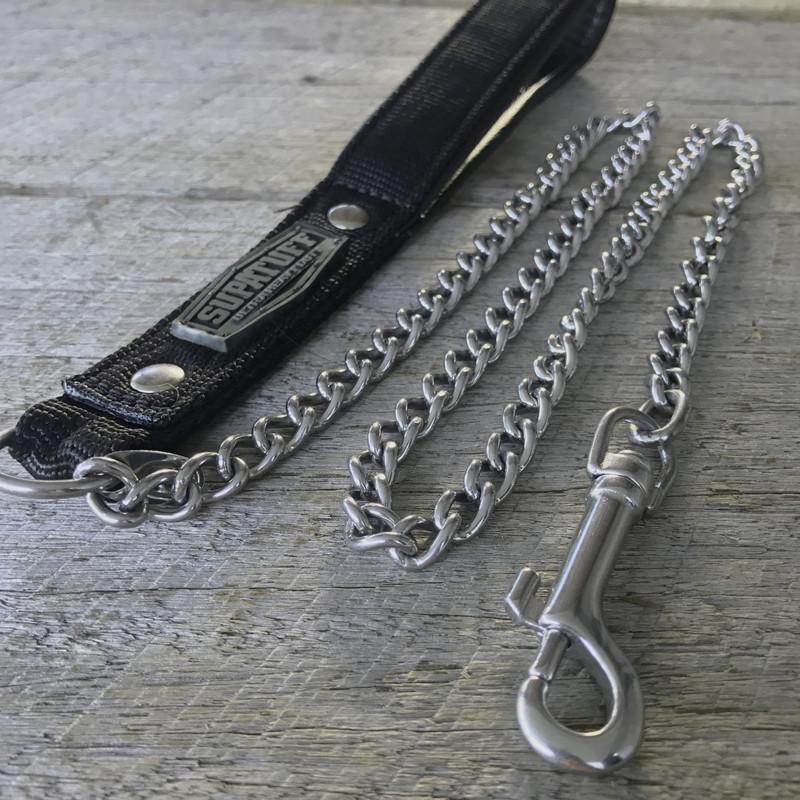
For the exercise sessions where the weighted vest is used, pair it with a quality lead from the Rogue Royalty dog leash range and a secure fitting harness such as the Active X Dog Harness, which is built for active use and distributes leash force across the chest rather than the neck during weighted training sessions.
Canine Weight Vest from $180.00. 250g ingots from $9.00. Cordura construction. Fully adjustable from Small to XX-Large.
Browse the Canine Weight Vest Range →What Australian Dog Owners Say About Rogue Royalty
Thick, well made, durable and padded on the inside for comfort. Its such a beautiful collar! The leather is great for my dogs sensitive skin and she looks badass!
I absolutely love this colour on my girl and the quality is great ..ideal for a girl like mine who loves hanging off the back of the ute.
Love the quality, and the design, and our looks awesome, thanks
Amazing quality collars!
Great product and service
Frequently Asked Questions: Weighted Dog Vest and Jumping
Can a weighted dog vest help stop jumping?
It works through two mechanisms. First, the added weight heightens proprioceptive body awareness, which slightly increases the cognitive processing required before impulsive actions like jumping. Second, a weighted vest accelerates energy expenditure during walks, producing a calmer post-exercise arousal state in which jumping is less likely. Neither mechanism eliminates jumping permanently without training, but both create the conditions in which training is more effective.
What is the difference between a weighted vest and a calming anxiety wrap for dogs?
Calming anxiety wraps apply compression without adding weight and work through pressure therapy for anxiety-driven behaviour. A weighted dog vest adds physical load to increase energy expenditure and body awareness during exercise. For jumping driven by excitement and excess energy, the weighted vest is the relevant tool. For jumping driven by anxiety or fear, addressing the anxiety is the priority.
What age can a dog start using a weighted vest?
Minimum 14 months for small and medium breeds. For large breeds (Labradors, German Shepherds, Rottweilers, and similar), wait until 18 to 24 months as growth plates close later. Adding resistance before growth plates close risks joint injury. Always start with the empty vest before adding any ingots.
How much weight should I put in a dog vest to stop jumping?
Start at zero weight for the first two to three sessions. Begin with two ingots (500g) once the dog moves comfortably in the empty vest. Increase gradually over weeks, never exceeding 10% of the dog's body weight. For jumping management specifically, even 2 to 4% of body weight during a walk is often sufficient to produce meaningful post-exercise arousal reduction.
How long should a dog wear a weighted vest per session?
Start with 10 to 15 minutes for the first two weeks. Gradually increase to 20 to 30 minutes as the dog conditions. Remove after each session: the vest is not designed for all-day wear. In Australian summer conditions, keep sessions shorter and schedule them for early morning or evening only.
Which dog breeds benefit most from a weighted vest to reduce jumping?
High-energy breeds that jump due to excess energy and high arousal: Labradors, Golden Retrievers, Australian Kelpies, Border Collies, Staffordshire Bull Terriers, and mixed breeds with working breed genetics. The weighted vest is most effective for breeds with the physical conditioning to handle resistance exercise safely and the energy levels that standard walks alone do not adequately address.
Is a weighted dog vest safe for Australian conditions?
Yes when used correctly with Australian heat adjustments. Schedule sessions for early morning or evening in temperatures above 28 degrees. Carry water and monitor for overheating signs: heavy panting, seeking shade, or slowing the pace. In extreme heat, use an unweighted walk instead. The Rogue Royalty Cordura vest is built for outdoor Australian use but heat management applies to all weighted exercise.

