





Dog training collars and recovery cones get confused more often than they should. Both sit on a dog's neck, both sometimes get called an "e-collar," and search results treat them as one category when they're completely separate tools. After sixteen years building dog gear and working with professional handlers, here's what each one actually is, the main types of dog training collars on the US market, the welfare considerations that matter, and how to make an informed choice without falling for marketing or hype on either side of the training debate.
The main types of dog training collars
Six categories cover the main market.
Flat training collars
Standard buckle or quick-release collar in full-grain leather or nylon. Holds the ID tag, attaches to a leash, applies no pressure beyond what the dog generates. The right starting point for almost every training program. Our handmade leather collar range covers daily-wear and basic training with vegetable-tanned hide.
Slip collars and slip chains
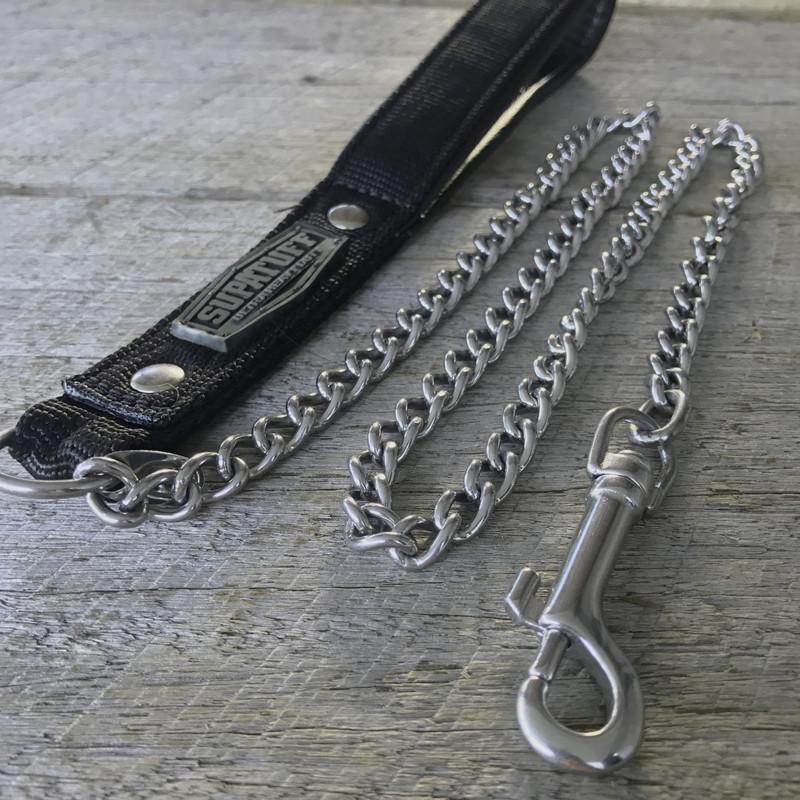
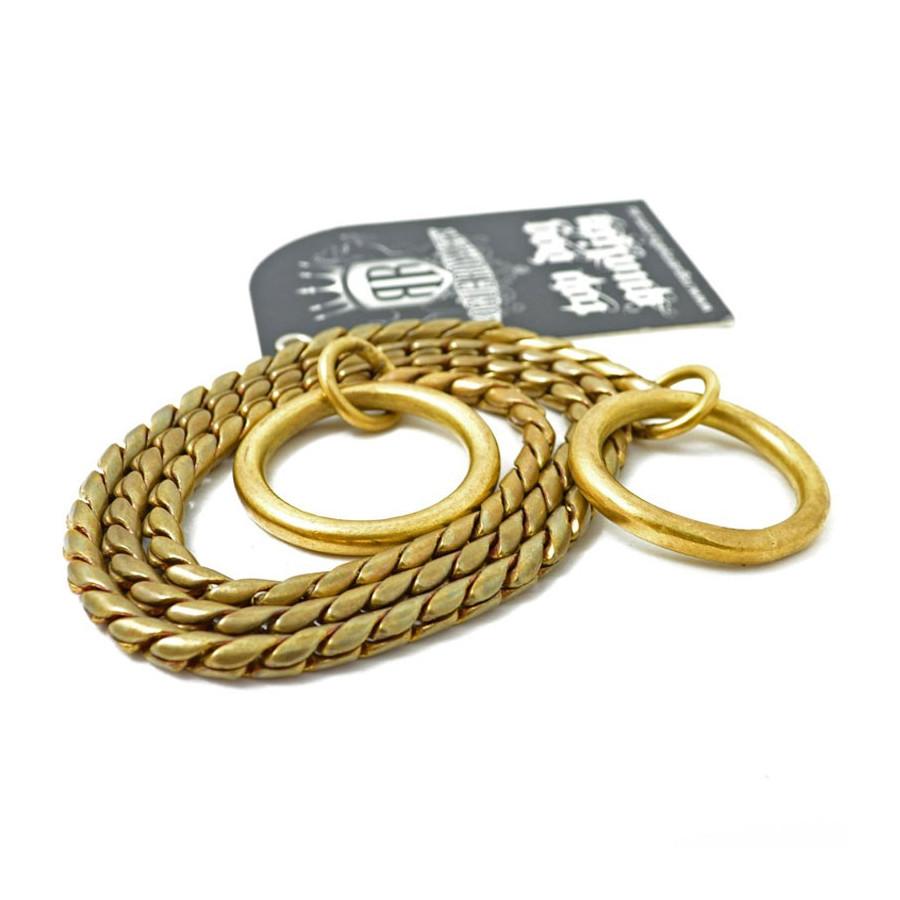
A loop that tightens when leash pressure applies and releases when it stops. The traditional obedience tool used in AKC competition, ring sport, and working dog training. Correct fitment is non-negotiable: the slip chain must sit high on the neck just behind the ears, not down at the shoulders. Misused, a slip chain becomes a choke chain. Our chain link collar collection covers slip chains in solid brass and stainless steel.
Martingale collars
A limited-slip design developed for sighthounds (Greyhound, Whippet, Saluki, Borzoi) whose heads are narrower than their necks. Tightens just enough to prevent backout, then stops at a fixed point. Less aversive than a full slip, more secure than a flat collar. A middle-ground choice for many owners.
Prong collars
A metal collar with inward-facing prongs that distribute pressure around the neck. Standard equipment in schutzhund, IPO, IGP, and police K9 training. Defenders argue the prong distributes force more evenly than a slip chain, lowering total pressure. Critics raise welfare concerns about aversive tools generally. The honest read: prong collars work in skilled hands and fail in unprepared ones. If you're considering one, work with a certified professional trainer first. Don't buy online and improvise.
Head halters
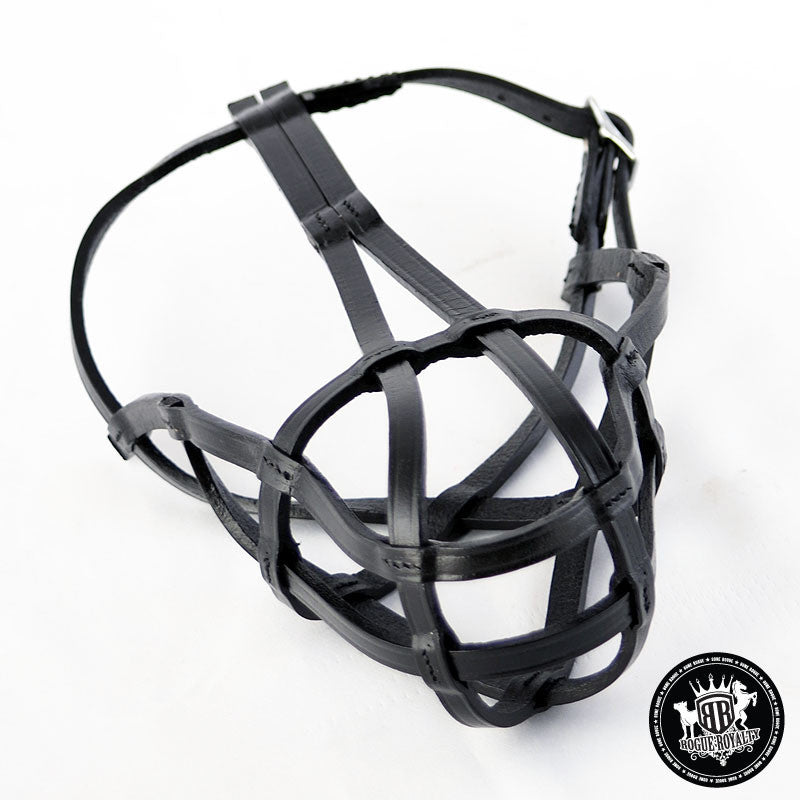
A collar that fits around the muzzle and behind the ears, redirecting the dog by turning the head. Halti and Gentle Leader dominate this category in the US. Marketed as gentle. Rogue Royalty's published position is that head halters create more behavioral and physical issues than they solve, particularly around the neck-twist mechanism. Our piece on head halter problems covers the detail.
Electronic training collars
Battery-powered remote collars delivering vibration, tone, or low-level electrical stimulation. The most polarizing tool in the category. Banned outright in Wales, Scotland, parts of Germany, and several Australian states; legal across the US. The AVMA's position acknowledges the spectrum of professional opinion and emphasizes that aversive tools require qualified guidance. Modern e-collars from reputable manufacturers offer dozens of stimulation levels, often tunable below the dog's perception threshold for cue-based work rather than correction. If you're considering one, work with a trainer certified in e-collar conditioning. This is not a YouTube tool.
Which training collar is right for your dog
A practical framework.
For everyday walking and basic obedience, a properly fitted flat leather collar handles most needs. Pair with positive reinforcement and a 4 to 6 foot leash.
For dogs that back out of standard collars (sighthounds, escape artists), a martingale solves the problem without escalating to aversive tools.
For consistent pullers, the first move is a properly fitted no-pull Y-front harness, not a more aversive collar. A harness solves pulling mechanically, no neck pressure required.
For AKC obedience, rally, ring sport, and traditional handler work, a slip chain remains standard when fitted high on the neck with timing-based corrections.
For working dogs in schutzhund, IPO, IGP, French ring, mondio ring, and police K9, prong collars and electronic collars enter the conversation. Both belong under professional supervision, never as a first response.
For brachycephalic breeds (French Bulldog, Pug, Boston Terrier, English Bulldog) and dogs with cervical spine or tracheal sensitivity, avoid all collar-based training pressure. Use a properly fitted Y-harness exclusively.
How to fit a training collar correctly
Fit decides whether a collar communicates or compresses.
Flat collars use the two-finger rule. Slide two fingers between the collar and the dog's neck. Tighter restricts breathing. Looser lets the dog back out.
Slip chains and martingales must sit high on the neck just behind the ears, not at the shoulders. A slip chain sitting low has zero training value and creates real choking risk.
Prong collars require professional fitting. The collar sits high, prongs flat against the skin, dead loop set so the active loop cannot fully close.
Electronic collars need snug skin contact at both contact points, rotated placement weekly to prevent contact dermatitis, and stimulation set at the lowest level the dog perceives.
For complete sizing across collars, harnesses, and leashes, see our sizing guide.
Common training collar mistakes
Buying the tool before learning the technique. The collar doesn't train the dog. The handler does.
Skipping the certified trainer step on prong collars and electronic collars. This isn't optional. Aversive tools without qualified guidance produce fearful, conflicted dogs.
Fitting incorrectly. Most training collar failures trace to the collar sitting wrong on the neck.
Leaving aversive collars on all day. Slip chains, prongs, and e-collars are training tools, not daily wear.
Using a training collar on a dog that doesn't need one. A puppy or calm adult learning basic obedience usually needs nothing more than a flat collar and consistent reinforcement.
What we make at Rogue Royalty
We've been hand-building dog gear in our Australian workshop since 2009. Full-grain leather collars, solid brass and stainless steel chain collars, leather leashes, harnesses, and training equipment built for serious handlers and everyday owners. We supply protection K9 units, working dog handlers, and over 30,000 dog owners across the United States, UK, Europe, and Australia.
Our leather collar range covers daily-wear and training. Our chain link collar collection covers slip chains for obedience and show work. Our harness range handles pulling and training pressure mechanically. Every piece ships with our craftsmanship guarantee. Workshop detail on how we build our gear for the deeper look.
We don't make electronic collars, prong collars, or recovery cones. For those, work with a certified trainer or your veterinarian.
The bottom line
Training collars are behavior tools ranging from everyday flat collars to specialized professional equipment, and the right one depends on the dog, the handler, and the goal.
For everyday wear and basic training, a leather collar covers most needs. For obedience competition and show work, a chain slip collar is the traditional standard. For pulling and training pressure, see our harness range. For aversive tools or recovery cones, work with a qualified trainer or your veterinarian.
Loyalty deserves royalty. Train with the right tool, properly fitted.
Frequently asked questions
What's the difference between a training collar and a recovery cone?
A dog training collar is a behavior tool for walks and training. A recovery cone is a vet-prescribed device that stops a dog from licking or biting a surgical site.
Why is an e-collar two different things?
The term "e-collar" refers to electronic training collars in trainer contexts and Elizabethan recovery cones in veterinary contexts. Same word, separate tools.
Are dog training collars safe?
Flat collars and martingales are safe for most dogs. Slip chains require correct technique. Prong collars and electronic collars require certified trainer guidance.
What is the best training collar for a puller?
For most pullers, a properly fitted Y-front no-pull harness is the right first answer. It solves pulling mechanically without applying neck pressure.
Are prong collars cruel?
The professional debate continues. Used correctly under guidance on appropriate dogs, defenders argue they're effective. Used incorrectly or on the wrong dog, they cause real harm.
Can puppies wear training collars?
A soft flat collar is appropriate for puppies. Aversive training collars are inappropriate during the developmental period when the trachea and cervical spine are still forming.
Should training collars stay on all day?
Aversive training collars (slip chain, prong, electronic) should come off after training sessions. Flat collars and martingales can be worn daily.

