





Most dog owners pick a collar based on color and price. That's why most dog collars don't last and don't fit properly. After sixteen years cutting leather, working with handlers, and watching what actually fails in the field, I can tell you the four decisions that determine whether your dog's collar is right for them: the type, the material, the size, and the hardware. Get those right and you've got a collar your dog can wear comfortably for years. Get them wrong and you'll be replacing it within twelve months. This guide walks through how to choose a dog collar that fits, lasts, and matches your specific dog.
QUICK ANSWER
Choose a dog collar based on four factors: type (flat, martingale, chain, or training), material (full-grain leather lasts longest, nylon is most affordable, biothane handles water), size (use the two-finger rule), and hardware (solid brass or stainless steel, never plated zinc). Match the width and thickness to your dog's size and pulling habits, and verify the fit weekly for growing dogs.
The dog collar decisions that actually matter
Forget aesthetics for a minute. The decisions that decide whether your dog's collar is comfortable, durable, and safe come down to four things. First, the type of collar (whether it's a daily-wear flat collar or a training-specific design). Second, the material (full-grain leather, nylon webbing, biothane, or chain). Third, the size and width matched to your dog's neck and weight. Fourth, the hardware (the buckle, the D-ring, and how they're attached to the strap).
Color, pattern, and engraving matter for personality. They don't decide whether the collar holds up. Most owners spend their decision-making energy on the wrong axis.
What type of dog collar should you choose
Five collar categories cover almost every dog and every use case. The right one depends on what the collar is actually doing day to day.
Flat collar (daily wear)
The standard buckle or quick-release collar. Holds the ID tag, attaches to a leash, applies no pressure beyond what the dog generates by pulling. This is the right collar for most dogs in most situations. The American Veterinary Medical Association and ASPCA both recommend a flat collar with a visible ID tag for any dog in public.
Martingale collar (limited-slip)
A flat collar with a small loop that tightens slightly under pressure, then stops at a fixed point. Originally developed for sighthounds (Greyhounds, Whippets, Salukis) whose heads are narrower than their necks. Useful for any dog that can back out of a standard flat collar.
Chain collar and slip chain
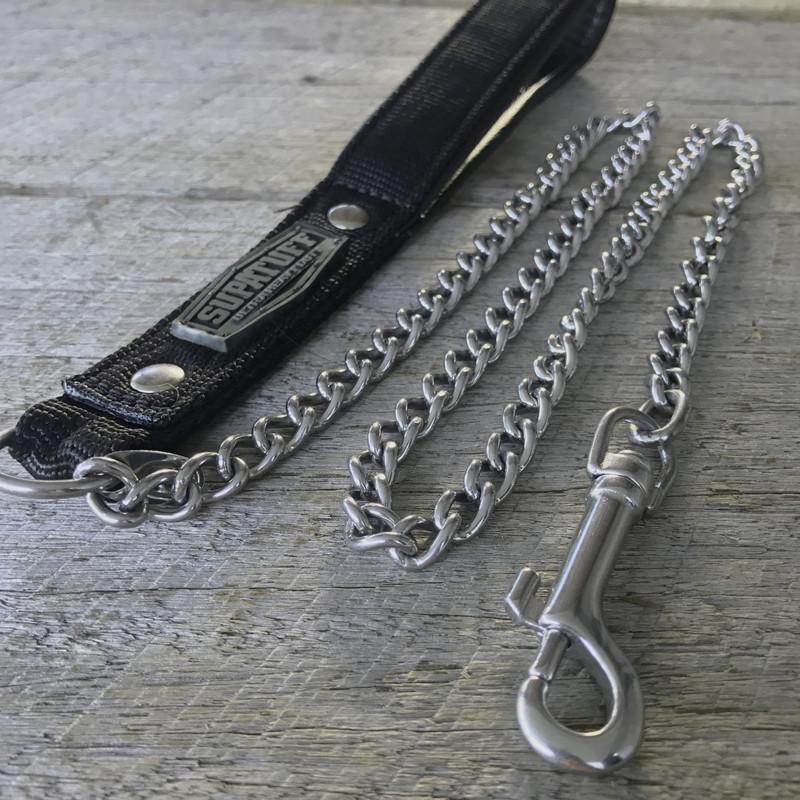
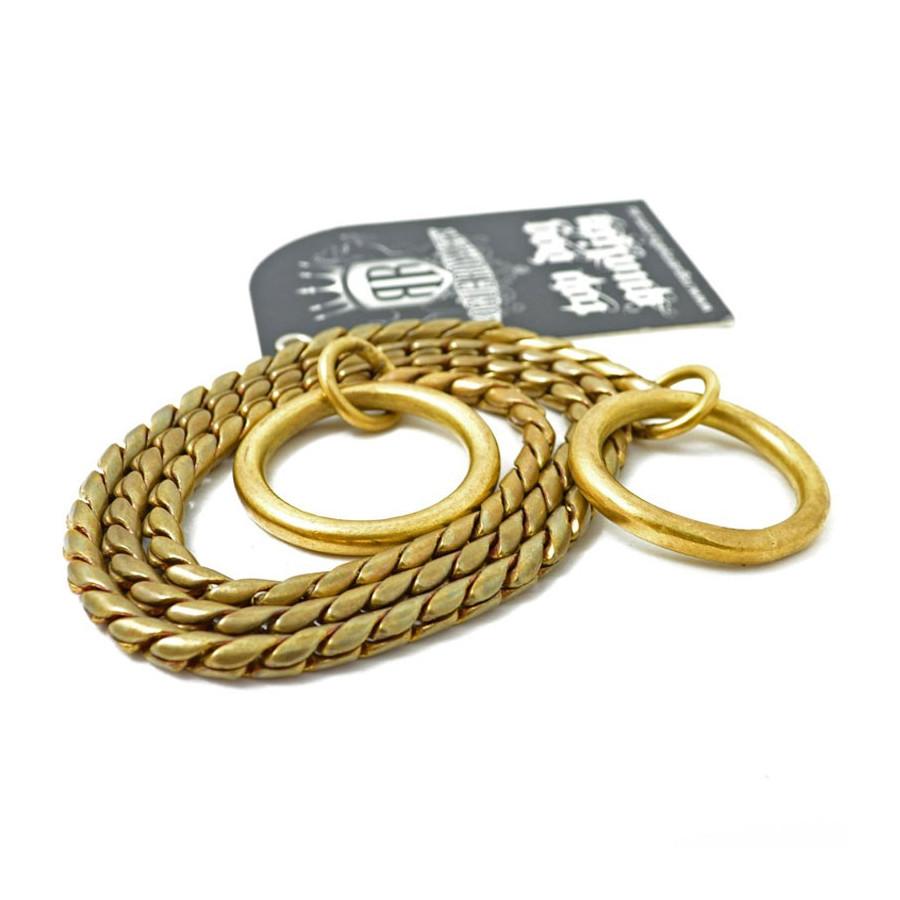
Solid brass or stainless steel chain links that tighten under leash pressure and release when slack returns. Traditional obedience and show ring tool. Requires correct fitting (sitting high on the neck behind the ears) and proper technique. Used incorrectly, a slip chain becomes a choke chain.
Training collar (prong, head halter, e-collar)
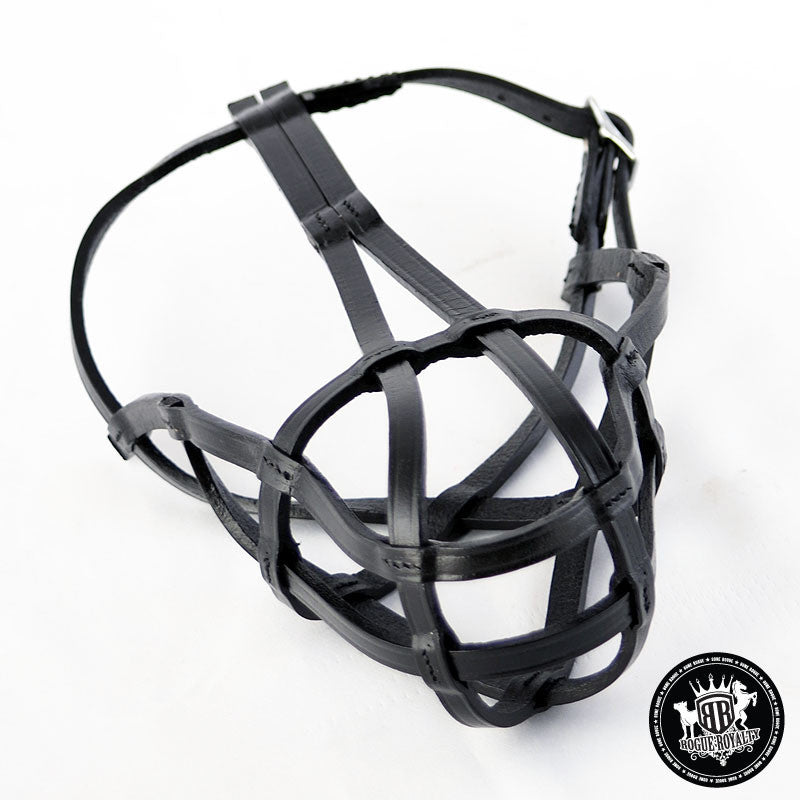
Specialized behavior tools. Not daily wear. Should be introduced under professional trainer supervision, never as a first response to pulling. Most dogs never need these.
Personalized ID collar
A flat or martingale collar with embroidered or engraved owner details directly on the collar itself. Useful as a backup to a hanging ID tag, especially for dogs that lose tags easily.
DAILY-WEAR FLAT COLLAR
Handmade Leather Dog Collar Range
Full-grain, vegetable-tanned hide hand-cut in our workshop. Solid brass or stainless steel hardware. Burnished and waxed edges. Built to last a decade with basic conditioning.
Browse Leather CollarsWhat material is best for a dog collar
Four materials dominate the US market. Each has different strengths.
Full-grain leather is the long-term standard. It's the strongest grade of leather (the outermost layer of the hide with the natural grain intact), softens with use, develops a patina, and lasts eight to twelve years with basic conditioning. Vegetable-tanned full-grain is the gold standard. Latigo and English bridle leather are excellent vegetable-tanned variants used in many premium collars.
Nylon webbing is the budget option. Light, washable, holds bright colors and reflective stitching, takes embroidery well. Frays at the buckle over time and can hold odor when wet. Solid for puppies and short-term use, less suited to long-term commitment.
Biothane is a coated webbing that's increasingly popular in the US. Waterproof, easy to clean, looks like leather but performs like rubber. Useful for swimming dogs, beach dogs, and high-rain climates.
Solid metal (brass, stainless steel chain) is for slip and chain collars only. Not for daily-wear collars. Heavier on the dog and tends to mat the coat at the contact area when worn continuously.
For most dogs in most use cases, full-grain leather is the longest-term answer. For puppies still growing through sizes, nylon is the practical choice for the first year. For dogs that swim daily or live in wet climates, biothane wins.
How to size a dog collar correctly
The two-finger rule is the industry standard for collar fit. Slide two fingers comfortably between the collar and the dog's neck. Tighter restricts breathing and circulation. Looser lets the dog back out during a startle reaction or while pulling.
To measure for a new collar, use a soft tape measure around the widest point of the dog's neck near the base, where the collar will actually sit. Add about an inch for medium and large dogs, slightly less for small breeds. Order the size that includes your measurement closer to the middle of the range, not the extreme end.
For growing puppies, check the fit weekly. A collar that fit on Monday can be snug by Friday in fast-growing breeds. Most medium and large breed puppies outgrow three to four collar sizes in their first year. For complete sizing guidance across collars, harnesses, and leashes, see our sizing guide.
Width and thickness: matching the collar to your dog
Width and thickness scale with the dog's weight and pulling habits. A collar too thin feels like it'll snap. Too wide overwhelms a small dog and looks awkward.
| Dog size | Width | Thickness | Example breeds |
|---|---|---|---|
| Toy / small (under 15 lbs) | 1/2 inch | 3 mm | Yorkie, Chihuahua, Maltese |
| Small (15 to 25 lbs) | 5/8 inch | 3 to 4 mm | French Bulldog, Cocker Spaniel |
| Medium (25 to 60 lbs) | 3/4 inch | 4 mm | Border Collie, Labrador, Boxer |
| Large (60 to 90 lbs) | 1 inch | 5 mm | German Shepherd, Pit Bull, Golden |
| Working / giant (90+ lbs) | 1 1/4 to 2 inches | 5 to 6 mm | Cane Corso, Malinois, Mastiff |
Wider collars on larger dogs distribute force across more skin surface, which is critical for dogs that pull. A 1-inch collar on a 90-pound Rottweiler is comfortable. A 5/8-inch collar on the same dog will dig into the neck during any leash pressure.
Hardware: what to look for
Hardware is where cheap collars quietly cut corners. The leather looks fine in the listing photos. The buckle is hollow plated zinc that bends under load.
What to actually look for:
Solid brass or solid bronze buckles and D-rings. They don't rust, don't bend, and develop a warm patina over years of use. Brass hardware is the long-term standard.
Stainless steel hardware for dogs around saltwater, beach dogs, and any wet climate. 316 grade stainless is the corrosion-resistant tier.
Avoid plated zinc. It looks identical to brass for the first month. Then the plating wears, the underlying zinc oxidizes, and the buckle starts to fail. Easiest tell on a cheap collar.
The same logic applies to rivets. Solid brass or copper rivets, set through the leather at every stress point, are what makes a collar last a decade. A collar held together with adhesive or with rivets that aren't properly set will fail at the buckle joint within the first year.
Choosing a dog collar by breed and use case
A few practical notes from the workshop.
Strong pullers (Pit Bull, American Staffordshire, Cane Corso, Rottweiler, Mastiff) need a 1 inch or wider full-grain leather collar with solid brass or stainless steel hardware. The width distributes the pull pressure across more neck surface. For walking, pair with a no-pull Y-front harness rather than relying on the collar for control.
Working breeds (Belgian Malinois, German Shepherd, Doberman) handlers often use a leather collar for daily wear and a separate slip chain for training. Same width range as strong pullers, often with a wider 1-1/4 to 2 inch option for protection sport handlers.
Sighthounds (Greyhound, Whippet, Saluki, Borzoi) need a martingale specifically because their heads are narrower than their necks. A standard flat collar will slip off during any startle reaction.
Brachycephalic breeds (French Bulldog, Pug, Boston Terrier, English Bulldog) can wear a collar for ID purposes but should not have leash pressure applied to it. Compromised airways plus neck pressure creates real breathing risk. Use a harness exclusively for walking.
Puppies need a soft, lightweight collar matched to current size, checked weekly, and replaced as they grow. Most medium and large breed puppies move through three to four collar sizes in the first year before settling into their adult collar.
Senior dogs and dogs with neck sensitivity benefit from a slightly wider, softer leather collar. Maximum strength isn't the priority. Comfort across the day is.
THE FULL RANGE
Rogue Royalty Dog Collars
Leather, chain, beaded, personalized. Every collar hand-built in our workshop with full-grain hide, solid brass or stainless steel hardware, and our craftsmanship guarantee. Sized for toy breeds through giant working dogs.
View the Full RangeWhen to replace a dog collar
Six signs it's time for a new collar.
The fit changed. The dog gained or lost weight, grew, or the leather stretched.
The buckle is bending, sticking, or releasing under load. A failing buckle is the most dangerous collar problem because it fails without warning.
The leather is cracking. Cracking means the conditioning routine was missed for too long. Sometimes recoverable with intensive conditioning, often not.
The D-ring is bent or loose. The D-ring is where the leash attaches, and a failing one will release the dog mid-walk.
The stitching is lifting. Lifted threads at the buckle joint or D-ring attachment are early warning. Replace before the stitching unravels entirely.
The dog scratches at it more than usual. This usually means fit is wrong, the collar got wet and didn't dry properly, or the leather started irritating the skin.
What we make at Rogue Royalty
We've been hand-building dog collars in our Australian workshop since 2009. Full-grain, vegetable-tanned leather. Hand saddle-stitching. Solid brass and 316 stainless steel hardware. Burnished and waxed edges. Every collar inspected before it ships. We supply protection K9 units, working handlers, and over 30,000 dog owners across the United States, UK, Europe, and Australia.
Our handmade leather collar range covers daily wear in widths from 1/2 inch through 2 inches. The chain link collar collection covers slip chains for obedience and traditional show work in solid brass and stainless steel. The puppy collection covers the first-collar life stage. Every collar ships with our craftsmanship guarantee. For the workshop detail on construction, see how we build our gear.
For more on why leather outlasts synthetic alternatives, our guide to leather dog collars covers the longer answer. To pair a collar with a leash in matching hide, our leather leash range is built to the same workshop standard.
READY TO CHOOSE A COLLAR
The Collar Your Dog Will Wear for a Decade
Full-grain leather, hand-built hardware, sized for every breed from toy to giant. Used by protection K9 handlers, working dog handlers, and serious owners worldwide.
Shop Dog CollarsFrequently asked questions
How tight should a dog collar be?
Use the two-finger rule. You should slide two fingers comfortably between the collar and the dog's neck. Tighter restricts breathing. Looser lets the dog back out.
What is the best material for a dog collar?
Full-grain, vegetable-tanned leather lasts longest (eight to twelve years with care). Nylon is most affordable for short-term use. Biothane is best for wet climates and swimming dogs.
What size collar does my dog need?
Measure around the widest point of the neck near the base where the collar sits. Order the size where your measurement falls in the middle of the range, not the extreme end.
How often should I check my dog's collar fit?
Weekly for growing puppies. Monthly for adult dogs. After any significant weight change for adults.
What's the difference between a flat collar and a martingale?
A flat collar stays the same size always. A martingale tightens slightly under pressure to prevent backout, then stops at a fixed point. Martingales suit sighthounds and any dog that slips out of flat collars.
Should puppies wear collars?
Yes, starting around eight to ten weeks. Use a soft, lightweight collar checked weekly and replaced as the puppy grows.
How long should a dog collar last?
A high-quality full-grain leather collar with solid brass or stainless steel hardware lasts eight to twelve years with basic conditioning. Cheap collars typically fail inside eighteen months.
Can my dog wear a collar all the time?
A flat collar can be worn day to day. Aversive training collars (slip chain, prong, electronic) should be removed after training sessions. Some trainers recommend removing all collars at night or in unsupervised crate time.
Are leather collars better than nylon?
For longevity, comfort, and total cost over a decade, yes. Nylon wins on upfront price and very wet conditions.
What collar is best for a strong dog?
A 1 inch or wider full-grain leather collar with solid brass or stainless steel hardware. For walking, pair with a no-pull Y-front harness rather than relying on the collar.

